Healthy Skin Diet: Proven Foods for Glowing Skin (2026)
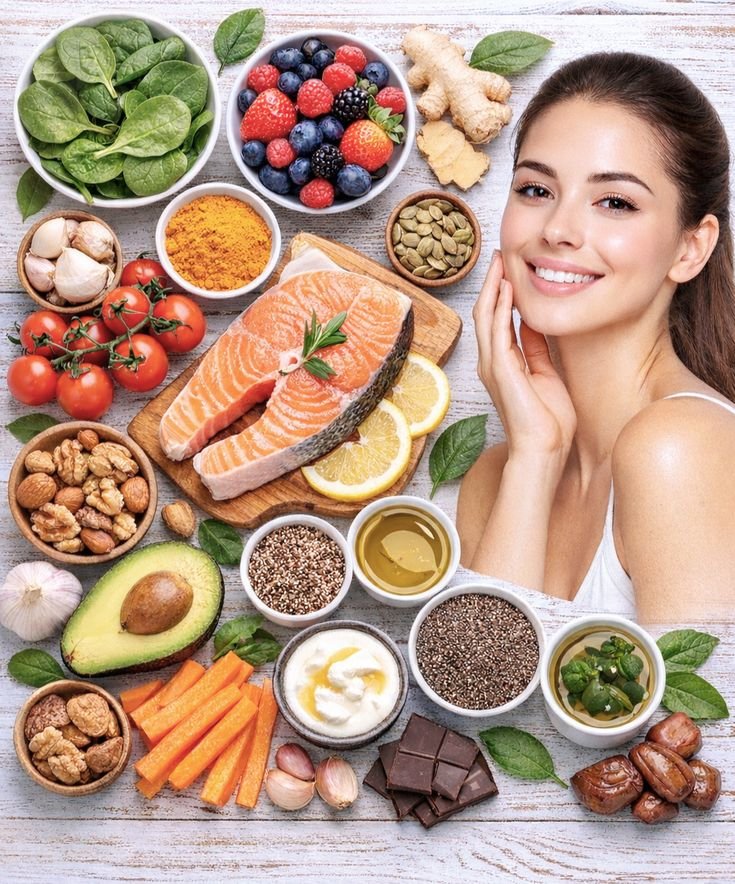
Did you know your skin cells renew themselves roughly every 27 to 48 days, and what you eat during that window shapes how those new cells turn out? A 2025 review published in the journal Nutrients found that food choices directly affect collagen production, oil balance, and inflammation, three things that decide whether your skin looks tired or radiant.
If you have ever wondered why your skin breaks out after a weekend of pizza and soda, the answer usually traces back to your plate, not just your skincare shelf. A true healthy skin diet is not about one magic fruit or an expensive supplement. It is about a pattern of eating that feeds your skin from the inside out, day after day.
In this guide you will learn which clear skin foods actually work, the vitamins for clear skin that dermatologists recommend, the worst foods for skin you should cut back on, how your diet changes by age and skin type, a full week meal plan, a grocery list you can use today, and answers to the most common questions people search for. This is the complete, no fluff guide you have been looking for.
TABLE OF CONTENTS
- What Is a Healthy Skin Diet and Why Does It Actually Work
- The Science Behind Food and Skin: How Nutrients Travel to Your Face
- The Best Clear Skin Foods to Add to Your Plate
- Vitamins for Clear Skin: The Nutrients Your Skin Cannot Live Without
- Worst Foods for Skin: What to Cut Back On
- Foods That Help vs Foods That Hurt: Quick Comparison Table
- The Gut Skin Connection: Why Your Stomach Matters as Much as Your Face
- Hydration and Healthy Skin: How Much Water Do You Really Need
- Building a Balanced Diet for Healthy Skin: Full Week Meal Plan
- Diet for Healthy Skin and Weight Loss: Can You Really Have Both
- Eating for Your Skin Type: Oily, Dry, Combination, and Sensitive Skin
- Diet and Skin by Life Stage: Teens, Adults, and Over 40
- Common Myths About Diet and Skin, Debunked
- A Simple Grocery List for Glowing Skin
- Simple Diet Tips for Healthy Skin You Can Start Today
- Real World Example: What Changed in 30 Days
- Frequently Asked Questions
- Conclusion
What Is a Healthy Skin Diet and Why Does It Actually Work
A healthy skin diet is an eating pattern built around whole foods, healthy fats, antioxidants, and enough water, all working together to support collagen, reduce inflammation, and control excess oil. This is not a trend. It is basic biology.
Your skin is your body’s largest organ, and it is made mostly of protein, water, and fat. When your diet lacks these building blocks, your skin shows it first, often before any other part of your body does. Think about it this way. Your liver, heart, and other organs are protected and prioritized by your body. Skin is often last in line for nutrients, which is exactly why deficiencies and poor eating habits tend to show up on your face before you notice them anywhere else.
A 2025 study in Nutrients identified how nutrients like vitamin C, zinc, and omega 3 fatty acids play a tangible role in shielding skin cells and speeding up their repair. Meanwhile, a 2025 review of acne and rosacea confirmed the link between high-sugar and refined-carb diets and more breakouts and inflammation.
Here is the simple truth. Your skin barrier is rebuilt using the raw materials you give it. Feed it well, and it functions well. Feed it poorly, and it struggles, no matter how much serum you apply on top.
A balanced diet for healthy skin is not a quick fix. It is a long term investment that pays off in fewer breakouts, less puffiness, and a more even tone within weeks.
Why Skincare Alone Is Not Enough
Topical products can only do so much because they work on the surface. Your skin’s ability to heal, produce collagen, and fight free radical damage depends on what is happening inside your body. Think of skincare as paint and diet as the foundation. A good coat of paint cannot fix a cracked foundation. You can spend hundreds of dollars on serums, but if your daily meals are full of sugar and fried food, you are fighting an uphill battle.
How Long Diet Changes Take to Show on Skin
Most people notice a difference within three to six weeks, since that lines up with your skin’s natural renewal cycle. Deeper changes, like reduced fine lines or long term acne control, can take two to three months of consistent eating. This is why crash diets or one week detox plans rarely produce lasting skin results. Your skin does not need a single burst but repeated exposure to good nutrients over multiple renewal cycles.
Why Do Some People See Results Faster Than Others?
How quickly your skin reacts to changes in diet depends on your genetics, age, stress levels and nutrient absorption. Someone with a healthy gut and low stress may notice a glow within two weeks, while someone recovering from years of poor eating may need two full months. This does not mean the diet is not working. It simply means your body needs more time to catch up.
The Science of Food and Skin: How Nutrients Reach Your Face
Understanding how food actually reaches your skin can help explain why diet is so important. When you eat, your digestive system breaks down the food into nutrients. These nutrients pass into your bloodstream and are carried all over your body. Some of these nutrients will go to the tiny blood vessels that supply your skin cells.
Collagen Production Starts With Food

Collagen is the protein that keeps your skin firm and elastic. Your body builds collagen using amino acids from protein, along with vitamin C as a required helper nutrient. Without enough of either, collagen production slows down, and skin starts to sag and wrinkle earlier than it should.
Inflammation Is a Two-Way Street
Certain foods, especially those high in sugar and refined carbs, trigger inflammation throughout your body. This inflammation often shows up on your skin as redness, breakouts, or puffiness. A 2024 pilot study from Germany found that acne patients had notably lower omega 3 levels, a fatty acid known for its anti-inflammatory effects, compared to people with clear skin.
Advanced Glycation End Products and Aging Skin
When you eat a lot of sugar, your body produces compounds called advanced glycation end products, often shortened to AGEs. Research published in a review on dietary antioxidants explained that AGEs interfere with collagen fiber repair, which speeds up visible aging like fine lines and sagging. This is one of the clearest, most direct links between sugar intake and looking older than your actual age.
Antioxidants Act as Your Skin’s Defense System
Antioxidants like vitamin C, vitamin E, and compounds found in green tea and berries neutralize free radicals before they can damage skin cells. Free radicals come from sun exposure, pollution, and even normal metabolism, so having enough antioxidants on board is like giving your skin a daily shield.
The Best Clear Skin Foods to Add to Your Plate

Clear skin foods are nutrient dense whole foods rich in antioxidants, healthy fats, and water, and they are the fastest way to visibly improve skin texture and tone. Here are the ones backed by real research, not internet myths.
Fatty Fish (Salmon, Mackerel, Sardines)
Fatty Fish (Salmon, Mackerel, Sardines) – Omega 3s are anti-inflammatory and are good for your skin barrier. A 2024 study in the journal Life out of Germany found that people with acne tended to have significantly lower levels of omega 3s in their blood than those with clear skin. Eating fatty fish two to three times a week is one of the simplest ways to correct this gap. If fresh fish is expensive where you live, canned salmon or sardines work just as well and cost far less.
Avocados
Avocados are rich in healthy monounsaturated fat and vitamin E, a combination that keeps skin soft and helps it hold onto moisture. They also contain compounds that may protect skin from sun damage over time. Half an avocado on toast or blended into a smoothie is an easy daily habit.
Berries and Citrus Fruits
Blueberries, strawberries, and oranges are full of vitamin C, which your body needs to make collagen. If you don’t get enough vitamin C, collagen production slows down and skin starts to look thinner and less firm. Berries also contain natural plant compounds that fight the same free radicals responsible for premature wrinkles.
Leafy Greens (Spinach, Kale)
Vitamin A and antioxidants in these greens help shield skin cells from everyday sun and pollution exposure. High water content helps with hydration from the inside. Adding a handful of spinach to eggs, smoothies, or pasta is an easy way to sneak in extra nutrients without changing your whole meal.
Nuts and Seeds (Walnuts, Chia, Flax)
Nuts and seeds give you plant based omega 3s, zinc, and vitamin E in one small serving. A 2024 review noted that legumes and seeds were linked to healthier omega 3 levels in people prone to breakouts. A small handful as a snack, or a spoonful of chia seeds in yogurt, adds up over a week.
Sweet Potatoes and Carrots
These orange veggies are loaded with beta carotene, which your body turns into vitamin A, a nutrient that’s super important for skin repair and reducing excess oil production. Roasted sweet potato is a simple side dish that works with almost any dinner.
Greek Yogurt and Fermented Foods
Probiotic-rich foods support gut health, and a healthier gut is directly linked to calmer, less inflamed skin. Research on probiotics and skin has shown they may reduce inflammatory markers tied to acne and irritation. Kimchi, sauerkraut, and plain kefir are other easy options if yogurt is not your thing.
Bell Peppers and Tomatoes
Bell peppers actually contain more vitamin C than oranges by weight, making them an underrated skin food. Tomatoes are rich in lycopene, an antioxidant linked to protection against sun damage over long term use. Both are easy to add to salads, sandwiches, or pasta sauces.
Green Tea
Green tea is rich in polyphenols, plant compounds shown to help calm inflammation and support the skin’s natural defense against environmental stress. Swapping one sugary drink a day for green tea is a small change with a real payoff over time.
Vitamins for Clear Skin: The Nutrients Your Skin Cannot Live Without

Vitamins for clear skin work as internal repair tools, supporting collagen production, oil control, and cell turnover, and a deficiency in even one of them can show up on your face within weeks. Below is a breakdown of the ones that matter most.
Vitamin C
Vitamin C is required for collagen synthesis, the process that keeps skin firm and elastic. Without enough of it, wounds heal slower and skin loses its bounce. Citrus fruits, bell peppers, and strawberries are excellent sources. Most adults need around 65 to 90 milligrams a day, which is easy to get from a single orange or a cup of strawberries.
Vitamin A
Vitamin A regulates how fast your skin cells turn over and helps control oil production, which is why it is a common ingredient in acne treatments. Getting it from food, through sweet potatoes, carrots, and leafy greens, is safer than megadosing supplements, since too much vitamin A from pills can actually cause problems.
Vitamin E
Vitamin E is an antioxidant that protects skin cells from damage caused by sun exposure and pollution. It works best when combined with vitamin C, as the two vitamins enhance each other’s effectiveness. Almonds, sunflower seeds, and avocados are reliable food sources.
Zinc
Zinc plays a direct role in controlling oil glands and reducing inflammation, which is why low zinc levels are often linked to worse acne. Pumpkin seeds, chickpeas, and lean meats are reliable sources. A small handful of pumpkin seeds a few times a week can help close this gap for many people.
Vitamin D
Often called the sunshine vitamin, vitamin D supports skin repair and helps calm inflammatory skin conditions. Many people in the United States are actually low in vitamin D, especially during winter months, so fatty fish, eggs, and fortified foods are worth adding regularly.
Copper
Copper is a lesser known mineral, but research has confirmed it plays a role in collagen maturation and even melanin production, which affects skin tone evenness. Foods like nuts, seeds, and shellfish provide small but meaningful amounts.
Omega 3 Fatty Acids
While technically a fat and not a vitamin, omega 3s deserve a spot on this list because they are one of the most researched nutrients for skin health. A 2025 systematic review on inflammatory skin diseases confirmed that omega 3 fatty acids help calm the inflammatory pathways involved in acne, psoriasis, and eczema.
Worst Foods for Skin: What to Cut Back On

Worst foods for skin are typically high in sugar, refined carbs, or processed dairy, and they trigger the exact hormonal and inflammatory responses that lead to breakouts and premature aging. Here is what the research points to.
Sugary Drinks and Refined Carbs
High-sugar and refined-carb foods cause a rapid spike in your blood sugar, which raises insulin levels. A meta-analysis reviewing dozens of studies through 2025 found a consistent association between high glycemic index diets and increased acne severity.
Simply put, white bread, soda, and pastries can undo the good work of a healthy meal. Even fruit juice, which many people assume is healthy, often carries as much sugar as soda once you remove the fiber found in whole fruit.
Dairy, Especially Skim Milk
Multiple studies have connected dairy, particularly skim milk, to increased acne breakouts. Researchers believe this happens because dairy can raise insulin like growth factor 1, a hormone that increases oil production in the skin. Interestingly, some research suggests full fat dairy may have a smaller effect than skim milk, though more study is needed here.
Fried and Ultra Processed Foods
Fried foods and heavily processed snacks are often high in unhealthy fats and low in nutrients, offering nothing your skin can use for repair. Over time, diets high in these foods are associated with more visible signs of aging. Fast food combo meals, chips, and packaged pastries fall squarely into this category.
Excess Alcohol
Alcohol dehydrates your body, including your skin, and it disrupts sleep, which is when your skin does most of its repair work. Occasional drinking is fine, but daily heavy intake shows up as dullness and puffiness fast. Alcohol also depletes vitamin A and C stores, further limiting your skin’s repair ability.
White Rice, White Bread, and Instant Noodles
These are all high glycemic index staples common in many American diets, and they behave in your body almost identically to sugar. Swapping them for whole grain versions is a simple, low effort upgrade that still lets you eat similar meals.
If sugar and dairy are the two most common triggers people notice, cutting both back for just three weeks is often enough to see a visible change.
Foods That Help vs Foods That Hurt: Quick Comparison Table
| Food Category | Effect on Skin | Better Choice |
|---|---|---|
| Sugary snacks and soda | Raises insulin, triggers oil production, and causes inflammation | Berries, fresh fruit |
| Skim or flavored milk | Linked to higher acne rates in studies | Plain Greek yogurt (in moderation) |
| Fried fast food | Low nutrients, high inflammatory fat | Baked salmon or grilled chicken |
| White bread and pastries | High glycemic index, worsens acne | Whole grains, oats, quinoa |
| Excess alcohol | Dehydrates skin and disrupts repair sleep | Herbal tea, infused water |
| Instant noodles and chips | Processed, low in nutrients, high sodium | Roasted nuts, air popped popcorn |
| Fatty fish | Reduces inflammation, strengthens barrier | Already a top choice |
| Leafy greens | Antioxidants protect against damage | Already a top choice |
| Fruit juice | High sugar without fiber | Whole fruit instead |
The Gut Skin Connection: Why Your Stomach Matters as Much as Your Face
Your gut and skin are more connected than most people realize, and doctors now refer to this relationship as the “gut-skin axis.” When your gut is inflamed or lacking good bacteria, that inflammation often travels through your bloodstream and shows up as breakouts, redness, or dullness on your face.
How Probiotics Help
Probiotics, the good bacteria found in fermented foods, may help lower inflammatory cytokines, the chemical messengers that cause irritation and breakouts. There’s promising research on acne and probiotics, with some studies showing people who ate fermented foods experienced fewer breakouts.
Foods That Support a Healthy Gut
Yogurt, kefir, sauerkraut, kimchi, and miso are all easy ways to introduce good bacteria into your gut. Fiber rich foods like oats, beans, and vegetables also matter here, since fiber feeds the good bacteria already living in your digestive system.
Signs Your Gut Might Be Affecting Your Skin
If you notice bloating, irregular digestion, and skin flare ups happening around the same time, your gut health may be a bigger factor than your skincare routine. Many dermatologists now ask about digestive symptoms when patients come in with stubborn acne or rosacea.
Hydration and Healthy Skin: How Much Water Do You Really Need

Water is one of the most overlooked parts of a healthy skin diet, yet it plays a direct role in how plump, smooth, and elastic your skin looks.
Why water is important for skin
Skin cells need water to function well, and dehydration can make fine lines more noticeable and leave skin looking dull and tired. Water also helps your body flush out toxins and helps deliver nutrients to skin cells through your bloodstream.
How Much Water Is Enough
Most adults need about eight glasses of water a day, but it varies depending on activity level, climate, and body size. If you live somewhere hot or exercise regularly, you probably need more. A quick way of checking your hydration is to look at the color of your urine. Pale yellow generally means you are well hydrated.
Foods That Add to Your Water Intake
Cucumbers, watermelon, oranges, and celery are all foods with extremely high water content, and eating them contributes to your daily hydration alongside plain water. This is a helpful trick if you struggle to drink enough water on its own.
Does Drinking More Water Cure Acne?
Drinking water alone will not cure acne, as acne breakouts have multiple causes, including hormones, genetics, and bacteria. However, proper hydration supports overall skin function and can make your skin look more radiant even while other factors are being addressed.
Building a Balanced Diet for Healthy Skin: Full Week Meal Plan
A balanced diet for healthy skin does not require perfection. It requires consistency, variety, and enough water each day. Here is a full week example you can adjust to your taste and budget.
Monday
Breakfast is Greek yogurt with berries and chia seeds. Lunch is a spinach salad with grilled chicken, walnuts, and olive oil dressing. Dinner is baked salmon with roasted sweet potato and steamed broccoli.
Tuesday
Breakfast is oatmeal topped with sliced banana and flaxseed. Lunch is a turkey and avocado wrap on whole grain bread. Dinner is a stir fry with tofu, bell peppers, and brown rice.
Wednesday
Breakfast is scrambled eggs with spinach and a side of orange slices. Lunch is a lentil soup with a side salad. Dinner is grilled mackerel with quinoa and roasted carrots.
Thursday
Breakfast is a smoothie with spinach, berries, Greek yogurt, and almond milk. Lunch is a chickpea salad with cucumber, tomato, and feta. Dinner is baked chicken thighs with sweet potato mash and green beans.
Friday
Breakfast is whole grain toast with mashed avocado and a boiled egg. Lunch is leftover baked chicken over mixed greens. Dinner is homemade fish tacos using corn tortillas, cabbage slaw, and salmon.
Saturday
Breakfast is cottage cheese with pineapple and walnuts. Lunch is a quinoa bowl with roasted vegetables and tahini dressing. Dinner is grilled shrimp with a side of sauteed kale and brown rice.
Sunday
Breakfast is a vegetable omelet with peppers and spinach. Lunch is a big salad using leftover proteins from the week. Dinner is a simple baked salmon with steamed asparagus, closing out the week with another skin friendly meal.
Snacks Throughout the Week
Rotate between a handful of almonds, an apple with peanut butter, carrot sticks with hummus, or a small bowl of berries. Keeping two or three go to snacks on hand prevents reaching for chips or sugary options when hunger hits.
Diet for Healthy Skin and Weight Loss: Can You Really Have Both

Yes, a diet for healthy skin and weight loss can absolutely overlap, because the same whole food, high fiber, high protein approach that clears your skin also supports fat loss and steady energy. The key is avoiding crash diets that strip your body of nutrients your skin needs.
Why Extreme Diets Backfire on Your Skin
Very low calorie or low fat diets often cause dull, sagging skin because your body does not get enough healthy fat or protein to maintain collagen and skin elasticity. Rapid weight loss can also lead to loose skin, since collagen production slows when your body is under stress. Fad diets that cut out entire food groups often remove key skin nutrients along with the calories.
The Overlap Between Clear Skin and Healthy Weight
Both goals benefit from the same foundation: lean protein, healthy fats, fiber rich vegetables, and low added sugar. A 2025 review on dietary patterns and skin aging noted that the Mediterranean style diet, rich in vegetables, fish, and olive oil, is linked to both better weight outcomes and improved wrinkle scores in adults. This diet was also highlighted in a 2023 American Heart Association statement as one of the top recommended eating patterns overall.
A Simple Rule to Follow
If a food supports steady blood sugar and gives your body real nutrients, it likely supports both your waistline and your skin. If it spikes blood sugar and offers little nutrition, it works against both goals. This one filter can guide almost every food decision you make.
Protein’s Double Role
Protein keeps you full longer, which naturally reduces overeating, while also supplying the amino acids your skin needs to rebuild collagen. Aiming for a source of protein at every meal, like eggs, chicken, fish, or beans, supports both weight goals and skin repair at the same time.
Eating for Your Skin Type: Oily, Dry, Combination, and Sensitive Skin

While the core principles of a healthy skin diet apply to everyone, small adjustments can help based on your specific skin type.
Oily and Acne-Prone Skin
Focus heavily on low glycemic foods, zinc-rich foods like pumpkin seeds, and omega 3s from fish. Reducing dairy and sugar tends to make the biggest difference for this skin type based on current research.
Dry Skin
Prioritize healthy fats from avocados, nuts, and olive oil, along with plenty of water. Dry skin often benefits the most from consistent omega 3 intake, since these fats help strengthen the skin’s natural moisture barrier.
Combination Skin
A balanced mix of everything works well here, with a slight emphasis on antioxidant rich fruits and vegetables to manage the uneven oil production that comes with combination skin.
Sensitive Skin
Anti-inflammatory foods like fatty fish, leafy greens, and green tea are especially helpful, while highly processed and fried foods tend to trigger more visible reactions for sensitive skin types.
Diet and Skin by Life Stage: Teens, Adults, and Over 40
Nutritional needs for skin shift as you age, and understanding this helps you fine tune your approach.
Teens and Acne Prone Years
Hormonal shifts during the teenage years make skin more reactive to high sugar and high dairy diets. Building good habits early, like favoring whole foods and reducing soda, can reduce breakout severity during these years.
Adults in Their 20s and 30s
This is often when stress and busy schedules lead to more takeout and processed meals. Prioritizing consistent meals with protein, healthy fats, and vegetables helps counter the effects of stress related skin issues like dullness and occasional breakouts.
Over 40 and Aging Skin
Collagen production naturally slows with age, making vitamin C, protein, and antioxidant intake even more important. A 2025 review connected antioxidant rich diets with reduced signs of photoaging, including fewer wrinkles, in adults over 40 who consistently followed a nutrient dense eating pattern.
Common Myths About Diet and Skin, Debunked
There is a lot of misinformation floating around about food and skin. Here are the most common myths, corrected with what the research actually shows.
Myth: Chocolate Always Causes Acne
Plain dark chocolate in moderation has not been strongly linked to acne in most research. The concern is usually with sugary, milk heavy chocolate bars, not cocoa itself.
Myth: Greasy Food Causes Oily Skin
Eating fried food does not directly transfer oil to your skin. The real issue is that fried foods are often high in refined carbs and unhealthy fats, which can trigger inflammation and indirectly affect oil production.
Myth: Drinking Enough Water Alone Will Clear Your Skin
Hydration helps, but it cannot fix hormonal or dietary triggers on its own. A truly healthy skin diet requires more than just water intake.
Myth: Supplements Work Just as Well as Whole Foods
Whole foods deliver nutrients alongside fiber and other compounds that work together, something isolated supplements cannot fully replicate. Supplements can help fill gaps but should not be the main strategy.
A Simple Grocery List for Glowing Skin
Keep this list handy for your next shopping trip so healthy choices are always within reach.
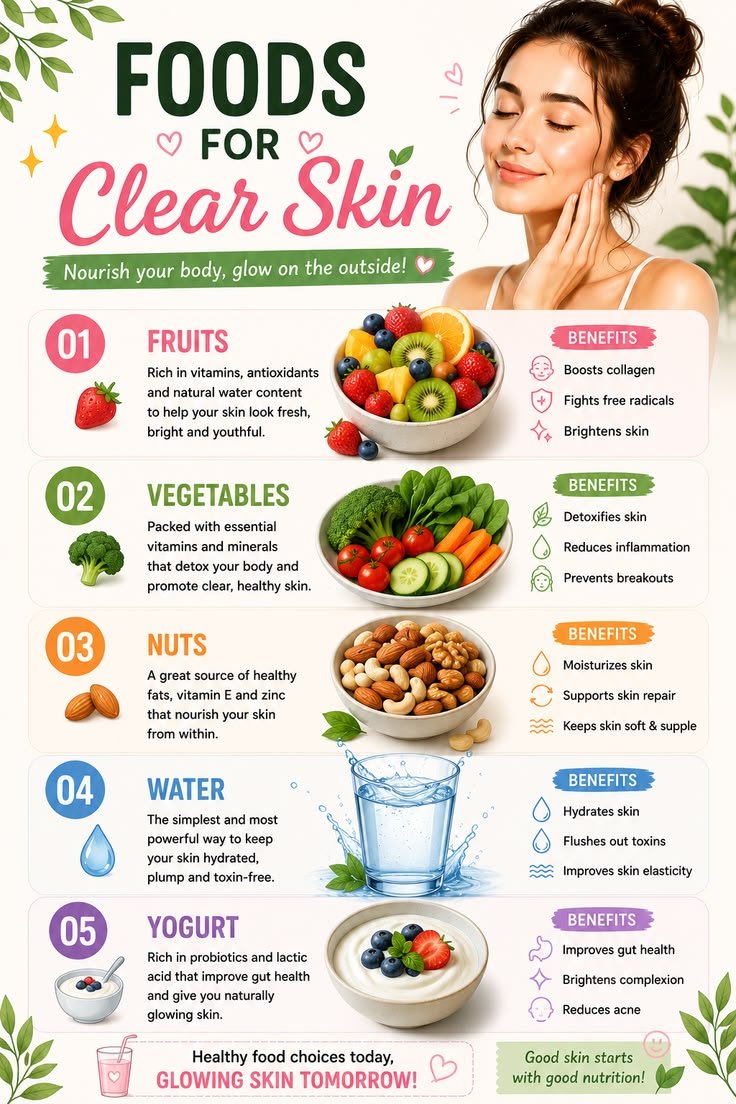
Produce section: spinach, kale, avocados, berries, oranges, bell peppers, tomatoes, sweet potatoes, carrots, and cucumbers.
Protein section: salmon, mackerel, sardines, eggs, chicken breast, chickpeas, lentils.
Dairy and alternatives: plain Greek yogurt, kefir, and almond milk.
Pantry staples: walnuts, almonds, chia seeds, flaxseed, pumpkin seeds, olive oil, oats, quinoa, and brown rice.
Extras, green tea, fermented foods like kimchi or sauerkraut, and fresh garlic and ginger for cooking.
Simple Diet Tips for Healthy Skin You Can Start Today
These diet tips for healthy skin are small, realistic changes that stack up to real results over a few weeks.
Tip 1: Add One Skin Food Per Meal
Instead of overhauling your entire diet overnight, add one clear skin food to each meal, like berries at breakfast or spinach at lunch.
Tip 2: Swap Sugary Drinks for Water or Herbal Tea
This single change reduces your daily sugar intake significantly without requiring any willpower battles over food.
Tip 3: Watch Your Dairy Intake for Two Weeks
If you suspect dairy is affecting your skin, cut it out for two weeks and track any changes. Many people notice a real difference.
Tip 4: Prioritize Sleep Alongside Diet
Your skin repairs itself most actively during deep sleep, so pairing good food with seven to nine hours of rest multiplies your results.
Tip 5: Plan Meals Ahead When Possible
Having healthy ingredients ready to go reduces the temptation to grab fast food when you are busy or tired, one of the biggest reasons diets fail.
Tip 6: Be Patient and Consistent
Skin reflects weeks of habits, not single meals. Give any diet change at least three to four weeks before judging the results.
Real World Example: What Changed in 30 Days
Consider a common scenario many people relate to. A person in their late twenties dealing with occasional breakouts and dull skin decides to make three changes for 30 days. They swap their daily soda for water and green tea, add fatty fish twice a week, and cut dairy down to just one serving a few times a week instead of daily.
By week two, breakouts along the jawline start to calm down slightly. By week four, skin tone appears more even, and the person notices less midday oiliness. This kind of result lines up closely with what research shows, since lowering glycemic load and dairy intake while raising omega 3 intake are two of the most consistently supported dietary changes for clearer skin. The point of this example is simple. You do not need a complete diet overhaul. A few targeted changes, done consistently, can produce visible results within a single month.
FREQUENTLY ASKED QUESTIONS
What foods give you glowing skin fast?
Fatty fish, berries, avocados, and leafy greens tend to show results fastest because they combine omega 3s, vitamin C, and antioxidants. These nutrients reduce inflammation and support hydration within just a few weeks of consistent eating.
What vitamins are best for clear skin?
Vitamin C, vitamin A, vitamin E, and zinc are the top nutrients for clear skin. They support collagen production, control oil, and protect skin cells from daily environmental damage.
Can diet really cause acne?
Yes, research consistently links high sugar, high glycemic index foods, and certain dairy products to increased acne severity. Diet is not the only cause of acne, but it is a meaningful, controllable factor.
How much water should I drink for healthy skin?
Most adults benefit from at least eight glasses of water daily, though needs vary by activity level and climate. Proper hydration keeps skin cells plump and supports natural detoxification.
Is dairy bad for skin?
Dairy, especially skim milk, has been linked to increased acne in several studies, likely due to its effect on hormone levels. Not everyone reacts the same way, so individual testing is the best approach.
How long does it take for a diet to improve skin?
Most people notice visible changes within three to six weeks, matching the skin’s natural renewal cycle. Deeper improvements can take two to three months of consistent healthy eating.
What is the best diet for skin and weight loss?
A Mediterranean-style diet rich in vegetables, fish, olive oil, and lean protein supports both clear skin and healthy weight loss. It avoids the nutrient deficiencies that crash diets often cause.
Are supplements as good as food for skin?
Whole foods are generally better because they deliver nutrients alongside fiber, water, and other compounds that work together. Supplements can help fill specific gaps but should not replace a balanced diet.
Does sugar really age your skin faster?
Yes, high sugar intake leads to compounds called advanced glycation end products, which interfere with collagen repair and speed up visible signs of aging like fine lines and sagging.
CONCLUSION

Your skin tells the story of what you eat, often before anything else does. A true healthy skin diet built around clear skin foods, key vitamins, and enough water can visibly improve your complexion within weeks, not months.
Three takeaways to remember. First, whole foods like fatty fish, berries, and leafy greens do more for your skin than any expensive product. Second, cutting back on sugar, refined carbs, and excess dairy removes the biggest dietary triggers behind breakouts. Third, the same balanced approach that clears your skin also supports healthy, sustainable weight loss.
Start small. Add one clear skin food to your next meal, swap one sugary drink for water, and give your body three to four weeks to show you what it can really do.




Post Comment