Vitamins for Clear Skin: The Real Guide That Works

Here is something worth knowing before you buy another bottle of pills. Your skin needs specific nutrients to repair itself, and most people are missing at least one of them without realizing it. Vitamins for clear skin are not about taking everything at once. They are about knowing exactly which ones your body actually uses to fight breakouts, calm redness, and keep your skin firm.
Walk into any pharmacy and you will see a wall of bottles promising clear, glowing skin. Most people grab whatever has the fanciest label, assuming more ingredients means better results. That is usually a waste of money. The truth is much simpler than the marketing makes it sound.
In this guide you will learn which vitamins matter most, how they actually work inside your skin, whether a multivitamin for clear skin is worth taking, and how much of each nutrient you really need. We will also look at food sources first, since that is usually the safer and more effective route before reaching for a supplement bottle.
Table of Contents
- Why Vitamins Matter for Your Skin
- The Core Vitamins for Clear Skin
- Should You Take a Multivitamin for Clear Skin
- 5 Vitamins for Glowing Skin, Ranked by Evidence
- Vitamins for Glowing Skin for Women, Explained
- Vitamins vs Skin Glow Whitening Claims
- Food First, Supplements Second
- Frequently Asked Questions
- Final Thoughts
Why Vitamins Matter for Your Skin
Vitamins matter for your skin because they are the raw tools your body uses to build collagen, control oil, and calm inflammation. Without enough of them, your skin cannot repair itself properly, no matter how good your skincare routine looks on paper.
Your Skin Is Built From Nutrients, Not Products
Your skin renews itself constantly, and every new layer is built using whatever nutrients are available in your bloodstream. If those nutrients are missing, the new skin that grows in is weaker, drier, or more prone to breakouts. This is really the foundation of a proper healthy skin diet, since food and vitamins work together long before any cream touches your face.
A Deficiency Shows on Your Face First
Skin is often one of the last organs to get priority when your body is short on nutrients, since your heart, liver, and other organs come first. That means a mild vitamin gap often shows up as dull, irritated, or breakout-prone skin before you notice any other symptom.
The Core Vitamins for Clear Skin

The core vitamins for clear skin are vitamin C, vitamin A, vitamin E, zinc, and vitamin D, and each one plays a completely different role in how your skin looks and heals.
Vitamin C Builds Collagen
Vitamin C is required for your body to produce collagen, the protein that keeps skin firm and helps wounds heal. A study published in October 2025 in the Journal of Investigative Dermatology found that adults who ate two kiwifruit a day, a food rich in vitamin C, showed measurable improvements in skin thickness and skin renewal within weeks. This is one of the clearest, most recent examples of how directly vitamin C affects visible skin health.
Zinc Controls Oil and Calms Breakouts
Zinc plays a direct role in reducing oil production and calming inflammation tied to acne. A 2024 case control study published in the Journal of Cosmetic Dermatology found a clear association between lower zinc levels and more severe acne in patients. Pumpkin seeds, chickpeas, and lean meats are reliable ways to keep your zinc levels where they should be.
Vitamin A Regulates Cell Turnover
Vitamin A controls how fast your skin cells turn over and helps manage oil production, which is why it shows up in so many acne treatments. Getting it through food, like sweet potatoes and carrots, is generally safer than high dose supplements, since too much vitamin A from pills can actually cause problems.
Vitamin E and Vitamin D Round Out the List
Vitamin E works as an antioxidant that protects skin cells from sun and pollution damage, and it works best paired with vitamin C. While vitamin D supports skin repair and calming inflammation, the same 2024 study on zinc also found that acne patients often had lower vitamin D levels compared to people with clear skin.
Together these five cover most of what your skin needs. Missing even one can quietly slow down your progress, even if everything else is on point.
Should You Take a Multivitamin for Clear Skin

A multivitamin for clear skin can help fill small gaps in your diet, but it works best as a backup plan, not your main strategy, since whole foods deliver nutrients your body absorbs more easily.
When a Multivitamin Actually Helps
If your diet is inconsistent, if you travel a lot, or if you simply do not eat enough fruits and vegetables most weeks, a general multivitamin can help close the gap. It will not replace a poor diet, but it can catch small shortfalls before they show up on your skin.
What to Look for on the Label
A multivitamin for clear skin should include vitamin C, vitamin A, vitamin E, zinc, and vitamin D at reasonable, non-extreme doses. Anything promising extremely high doses of a single vitamin is usually a red flag rather than a bonus, since some vitamins, like vitamin A, can cause harm in excess.
Supplements Cannot Replace Real Food
Whole foods deliver vitamins alongside fiber and other compounds that work together in ways an isolated pill cannot fully copy. This is one reason our guide on clear skin foods pairs so naturally with this one, since food should always come before supplements in the order of what actually helps.
5 Vitamins for Glowing Skin, Ranked by Evidence
Here are the 5 vitamins for glowing skin ranked by how strong the current research actually is behind each one, starting with the most well supported.
| Rank | Vitamin | What It Does | Strength of Evidence |
|---|---|---|---|
| 1 | Vitamin C | Builds collagen, brightens tone | Strong, confirmed in a 2025 human trial |
| 2 | Zinc | Reduces oil, calms breakouts | Strong, confirmed across multiple studies |
| 3 | Vitamin D | Supports repair, reduces inflammation | Moderate, linked in case control studies |
| 4 | Vitamin A | Controls cell turnover and oil | Moderate, strong for treatment, less for prevention |
| 5 | Vitamin E | Antioxidants protect from damage | Moderate, works best alongside vitamin C |
Why Vitamin C Tops the List

Vitamin C sits at the top because a real, recent human study backs it directly, not just theory or animal research. That kind of evidence is rare in skin nutrition, which is exactly why this vitamin deserves the attention it gets.
Why Ranking Matters More Than a Long List
Knowing which vitamin actually has strong evidence behind it helps you prioritize your grocery cart instead of trying to fix everything at once. Start with vitamin C and zinc, then build outward from there.
Vitamins for Glowing Skin for Women, Explained
Vitamins for glowing skin for women follow the same core list as anyone else, but hormonal shifts tied to menstrual cycles, pregnancy, and menopause can change how much of certain nutrients your body actually needs.
Hormonal Changes Affect Skin Nutrient Needs
Hormonal fluctuations can increase oil production or sensitivity at different points in a woman’s cycle, which is when zinc and vitamin A become especially useful for keeping breakouts in check. Many women notice their skin reacts differently to the same foods depending on where they are in their cycle.
Iron and Skin Tone Are Connected Too

While not one of the core five, iron deficiency, which is more common in women, can cause skin to look pale or dull. Pairing iron rich foods like spinach and lentils with vitamin C actually helps your body absorb iron better, creating a small but useful overlap between the two nutrients.
This is easy to miss. A lot of women chase brightness with vitamin C alone and skip the iron piece entirely.
Vitamins vs Skin Glow Whitening Claims
“Vitamins for skin glow whitening” is a phrase that gets used loosely online, and it is worth understanding the difference between genuinely brighter, healthier skin and marketing claims about whitening.
What Vitamins Can Actually Do
Vitamin C and vitamin E can genuinely help even out skin tone over time by reducing oxidative damage and supporting collagen, which often makes skin look brighter and more even. This is a real, evidence-backed effect, not a marketing trick.
What Vitamins Cannot Do
No vitamin will permanently change your natural skin tone or lighten it beyond your genetics, despite what some products claim. Be cautious of anything promising dramatic whitening results from a pill, since the realistic effect is a healthier, more even glow, not a change in your actual skin color.
Food First, Supplements Second

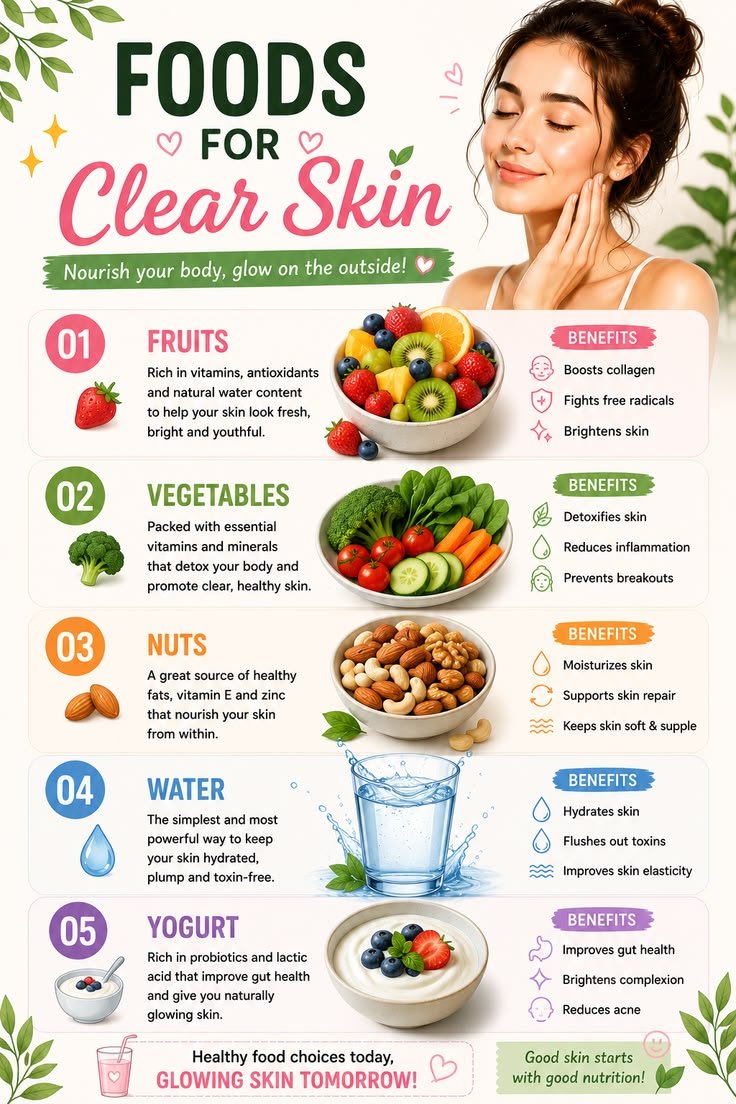
Food should always be your first source of vitamins for clear skin, since whole foods come with fiber, water, and other compounds that work together in ways a pill cannot fully replicate.
Building Meals Around These Nutrients
Citrus fruits and bell peppers cover vitamin C, pumpkin seeds and chickpeas cover zinc, and sweet potatoes and carrots cover vitamin A. If you find yourself eating a wide range of these foods most weeks, you are already covering most of what your skin needs without any supplement at all.
When Diet Alone Is Not Enough
Some people, especially those with restrictive diets or certain health conditions, genuinely cannot get enough of these nutrients through food alone. In those cases, a targeted supplement for the specific vitamin you are missing makes more sense than a generic multivitamin. It is also worth knowing which everyday foods work against these efforts, which is exactly what our guide on worst foods for skin breaks down in more detail.
Frequently Asked Questions
What vitamins are best for clear skin?
Vitamin C, zinc, vitamin A, vitamin E, and vitamin D are the top nutrients for clear skin. They support collagen production, control oil, and protect skin cells from daily damage, with vitamin C and zinc currently having the strongest research behind them.
Is a multivitamin for clear skin actually worth it?
A multivitamin can help fill small gaps if your diet is inconsistent, but it works best as a backup, not a main strategy. Whole foods still deliver nutrients more effectively than most supplement pills.
What are the 5 vitamins for glowing skin?
Vitamin C, zinc, vitamin D, vitamin A, and vitamin E make up the core five. Vitamin C and zinc currently have the strongest scientific support behind their effects on visible skin health.
Do vitamins for skin glow and whitening actually work?
Vitamin C and vitamin E can genuinely brighten and even out skin tone over time, but no vitamin permanently changes your natural skin color. Be skeptical of products promising dramatic whitening results.
Are vitamins for glowing skin for women different from men?
The core vitamins are the same for everyone, but hormonal shifts tied to a woman’s cycle can change how much zinc and vitamin A her skin needs at different times. Iron also plays a small supporting role for women specifically.
How long before vitamins show results on skin?
Most people notice changes within three to six weeks, which lines up with how long skin cells take to renew. A 2025 study on vitamin C and skin found measurable improvements within a similar timeframe using food sources alone.
Can too much vitamin A hurt my skin?
Yes, high-dose vitamin A supplements can cause problems, including toxicity, unlike getting vitamin A through food sources like sweet potatoes and carrots. Food sources are generally the safer route for this particular vitamin.
Is zinc really linked to acne?
Yes, a 2024 case control study found a clear association between lower zinc levels and more severe acne. Zinc helps reduce oil production and calm the inflammation behind breakouts.
Conclusion

Clear skin really does start from the inside, and the right vitamins for clear skin make a measurable difference when you understand which ones actually matter. Three things to remember. First, vitamin C and zinc currently have the strongest evidence behind them, so start there. Second, a multivitamin for clear skin can help fill gaps, but food should always come first. Third, be skeptical of any product promising instant whitening or dramatic overnight results, since real change takes a few consistent weeks.
Start by adding one vitamin C-rich food and one zinc rich food to your meals this week. For the complete picture beyond just vitamins, explore our full healthy skin diet guide next.




Post Comment