Clear Skin Foods: The Real Guide That Works
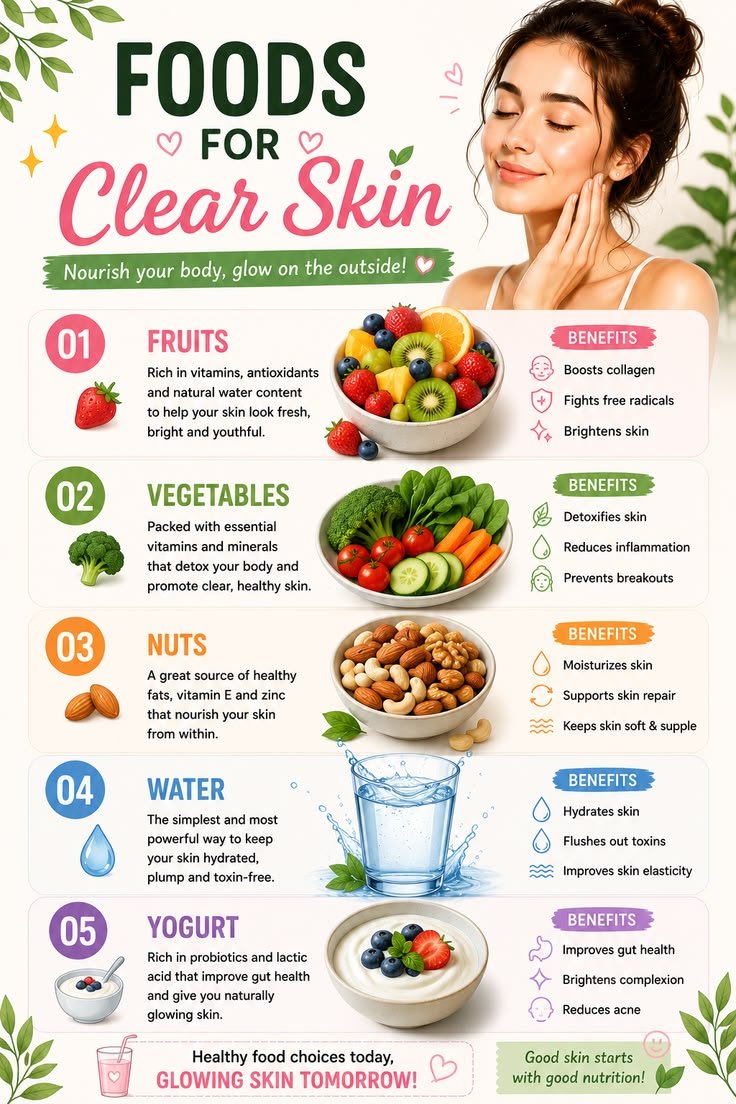
Here is something most people never think about. Your skin cells replace themselves roughly every month, and what you eat during that time decides how those new cells turn out. So if you keep asking what foods make your skin clear, the honest answer is that clear skin foods are not a trend. They are simple, everyday ingredients that give your body what it needs to repair and protect your skin from the inside.
Most people spend more time reading their moisturizer label than thinking about what is on their plate. That is backwards, and it is probably why so many people feel stuck despite trying product after product. Your face is a running report card of what you have eaten the last few weeks, whether you realize it or not.
The good news is that fixing this does not take a total overhaul. It usually comes down to a few small, repeatable choices that add up over time, which is exactly what this guide breaks down in plain, simple language.
In this guide you will learn exactly what to eat to have clear skin, which vegetables good for skin deserve a permanent spot in your kitchen, which foods quietly work against you, and how long it actually takes to see a difference. No expensive supplements, no complicated rules, just food choices backed by how your skin really works.
Table of Contents
- Why Food Affects Your Skin More Than You Think
- What Foods Make Your Skin Clear
- Vegetables Good for Skin You Should Eat Every Week
- What to Eat to Have Clear Skin, Meal by Meal
- Foods That Quietly Work Against Your Skin
- Clear Skin Foods vs Foods to Avoid
- Simple Daily Habits That Boost Results
- How Long Until You See Real Results
- Frequently Asked Questions
- Final Thoughts
Why Food Affects Your Skin More Than You Think
Food affects your skin because every nutrient you eat travels through your bloodstream and reaches the small blood vessels that feed your skin cells directly. This is not a theory; it is basic biology, and it is why your plate matters just as much as your skincare shelf.
Your Skin Is Rebuilt From What You Eat
Skin is mostly made of protein, water, and fat. When your meals are missing these building blocks, your skin often shows it before any other part of your body does. It is one of the first places deficiencies and poor habits become visible.
Your body prioritizes organs like your heart and lungs first when nutrients are limited. Skin is near the bottom of that list, which is why poor eating shows up on your face before you feel it anywhere else.
Skincare Works on the surface; food works from within
Think of skincare as paint and your diet as the foundation underneath it. A great coat of paint cannot fix a cracked foundation, which is really the whole idea behind a proper, healthy skin diet: food first, skincare second. You can spend a lot of money on serums, but if your daily meals are working against you, that money does not go very far.
What Foods Make Your Skin Clear

What foods make your skin clear comes down to a short, simple list of whole foods that repeatedly show up in nutrition research, and none of them are hard to find at a regular grocery store.
Fatty Fish Should Be on Your Plate Weekly
Salmon, sardines, and mackerel are rich in omega 3 fats, which help calm the redness and irritation behind most breakouts. People who eat fatty fish two to three times a week tend to report calmer, less reactive skin over time. If fresh fish feels expensive, canned salmon works just as well.
Berries and Citrus Fruits Support Repair
Your body uses vitamin C to build collagen, the protein that keeps skin firm and helps wounds heal faster. Strawberries, blueberries, and oranges are some of the easiest ways to get enough of them in a normal day.
Eggs and Greek Yogurt Give You Building Blocks
Protein supplies the material your skin needs to rebuild itself, while the probiotics in plain Greek yogurt support gut health, which is more connected to skin than most people realize. Having a protein source at every meal makes a noticeable difference over a few weeks.
Skin repair is basically a construction project, and protein is the raw material. If your meals lean heavy on carbs, adding an egg or some Greek yogurt is an easy upgrade.
Vegetables Good for Skin You Should Eat Every Week

Vegetables good for skin are usually high in antioxidants and water, both of which protect your skin cells from daily damage and help keep them hydrated from within.
Leafy Greens Do a Lot of Quiet Work
Spinach and kale are loaded with vitamin A and antioxidants that shield skin from sun and pollution damage. They are also mostly water, which is an easy way to support hydration without drinking anything extra. A handful tossed into eggs or a smoothie takes seconds.
Bell Peppers and Sweet Potatoes Are Underrated
Bell peppers actually contain more vitamin C by weight than oranges, which surprises most people the first time they hear it. Sweet potatoes and carrots bring beta carotene, which your body turns into vitamin A, a nutrient tied directly to skin repair and oil control.
Most people grab an orange for vitamin C and skip peppers entirely. One sliced red bell pepper does more for your skin than a glass of orange juice, without the added sugar.
Tomatoes Bring Something Different to the Table
Tomatoes carry a compound called “lycopene,” which has been studied for its role in protecting skin from sun-related damage over time. Adding them to salads or sauces is an easy, low effort way to round out your weekly vegetable intake.
What to Eat to Have Clear Skin, Meal by Meal
Figuring out what to eat to have clear skin gets much easier once you stop chasing single superfoods and start building balanced meals instead.
A Simple Formula for Every Plate
Fill half your plate with vegetables or fruit, a quarter with lean protein, and the last quarter with whole grains or a healthy fat like avocado or olive oil. This naturally crowds out the sugar and refined carbs known to trigger breakouts, without you needing to count anything.
Snacks That Do Not Undo Your Progress
A small handful of almonds, carrot sticks with hummus, or a bowl of berries keeps your blood sugar steady between meals. Steady blood sugar matters because spikes are closely tied to the oil production behind clogged pores and breakouts.
An Example Day That Works
Breakfast could be eggs with spinach, lunch a salad with grilled chicken and olive oil, and dinner baked salmon with roasted sweet potato. This is a realistic pattern anyone can repeat most days without feeling restricted.
Foods That Quietly Work Against Your Skin

Just as important as what you add is what you start noticing, since a few common worst foods for skin work against you without most people realizing it.
Sugar Is the Biggest Everyday Culprit
Sugary drinks, white bread, and pastries spike blood sugar quickly, which raises insulin and increases oil production. Multiple studies have linked high-sugar, high-glycemic diets to worse acne. Even fruit juice, which feels healthy, often carries as much sugar as soda once the fiber is removed.
Dairy Deserves a Second Look
Skim milk in particular has been linked to more breakouts in several studies, likely tied to its effect on hormones connected to oil glands. Reactions vary from person to person, so testing a two-week break is more useful than cutting it out based on someone else’s experience.
Fried and Heavily Processed Food
Fried food and packaged snacks are often high in unhealthy fats and low in anything your skin can actually use. Over time, diets built around these foods are linked to more visible signs of aging and dullness.
Clear Skin Foods vs Foods to Avoid
| Category | Choose This | Skip This |
|---|---|---|
| Fruit | Fresh berries, oranges | Fruit juice, sugary dried fruit |
| Protein | Salmon, eggs, chicken | Fried chicken, processed deli meat |
| Dairy | Plain Greek yogurt | Skim milk, flavored yogurt |
| Grains | Oats, quinoa, brown rice | White bread, instant noodles |
| Drinks | Water, green tea | Soda, sweetened coffee drinks |
| Snacks | Nuts, carrot sticks | Chips, candy |
Simple Daily Habits That Boost Results
Diet does most of the heavy lifting, but a few daily habits either speed up your results or quietly cancel them out.
Water Does More Than People Assume
Dehydrated skin looks duller and shows fine lines more easily. Aim for around eight glasses a day, and lean on water-rich foods like cucumber and watermelon if plain water is hard to keep up with.
Sleep Is When Repair Actually Happens
Your skin does most of its real repair work while you are asleep. Pairing good food choices with seven to nine hours of rest is what turns a decent diet into visible results you can actually see.
This is the part most people skip. You can eat well all day and still see slow progress on five hours of sleep, since your skin repairs itself mostly while you are asleep.
What You Are Actually Feeding Your Skin
Water and sleep matter, but so does what is actually in your food. Vitamins for clear skin like vitamin C, zinc, and vitamin A are doing most of the real work behind the scenes, which is why certain foods make such a visible difference while others barely move the needle at all.
How Long Until You See Real Results
Most people notice a difference within three to four weeks, which lines up with how long it takes skin cells to fully renew themselves. Deeper changes, like fewer breakouts or a more even tone, usually take closer to two or three months of staying consistent. If you have been eating better for a week and see nothing yet, that is completely normal and not a sign it is not working.
Think of it like working out. Nobody expects visible muscle after one gym session. Skin works the same way, so give it the same patience.
Frequently Asked Questions
What foods make your skin clear the fastest?
Fatty fish, berries, and leafy greens tend to work fastest since they combine healthy fats, vitamin C, and antioxidants together. Most people notice a visible difference within three to four weeks of eating them consistently as part of their meals.
What vegetables good for skin should I eat daily?
Spinach, bell peppers, sweet potatoes, and carrots are great daily picks. They deliver vitamin A and vitamin C, two nutrients closely tied to skin repair and protection against everyday sun and pollution damage.
What to eat to have clear skin before a big event?
There is no true overnight fix, but cutting back on salt and sugar the day before, while drinking more water and eating enough protein, can reduce puffiness and help your skin look brighter for the day.
Is dairy really bad for clear skin?
Skim milk especially has been linked to more breakouts in research, likely due to its effect on certain hormones. Reactions vary person to person, so a two week break from dairy is the easiest way to test it yourself.
Can I get clear skin from food alone, without skincare?
Food supports your skin from the inside, but skincare still matters for things like sun protection and surface hydration. The two work best as a team rather than one replacing the other completely.
Do vitamins really make a difference for clear skin?
Yes, vitamins like C, A, and zinc play a direct role in repairing skin and controlling oil. Getting them from food is usually safer and more effective than relying on supplements alone.
How long before clear skin foods actually show results?
Most people see early changes within three to four weeks, which matches the skin’s natural renewal cycle. Deeper improvements, like reduced breakouts, typically take two to three months of staying consistent with your habits.
Are worst foods for skin really that harmful?
Yes, foods high in sugar, refined carbs, and skim dairy are consistently linked to more breakouts and inflammation in research. Cutting back on them, even gradually, tends to produce a noticeable improvement within a few weeks.
Conclusion

Your skin is basically a running record of what you have been eating for the last few weeks. Three things worth remembering. First, clear skin foods like fatty fish, berries, and leafy greens do more for your complexion than most products on your bathroom shelf. Second, vegetables good for skin, especially bell peppers and sweet potatoes, deserve a permanent spot on your grocery list. Third, pulling back on sugar and dairy removes two of the biggest everyday triggers behind breakouts.
Start small. Swap one sugary drink for water, add one vegetable to your next meal, and give it three to four weeks before judging the results. Ready to build your full routine? Explore our complete healthy skin diet guide for the entire week-by-week plan.




Post Comment