Does Whey Protein Cause Acne? The Real Answer for 2026

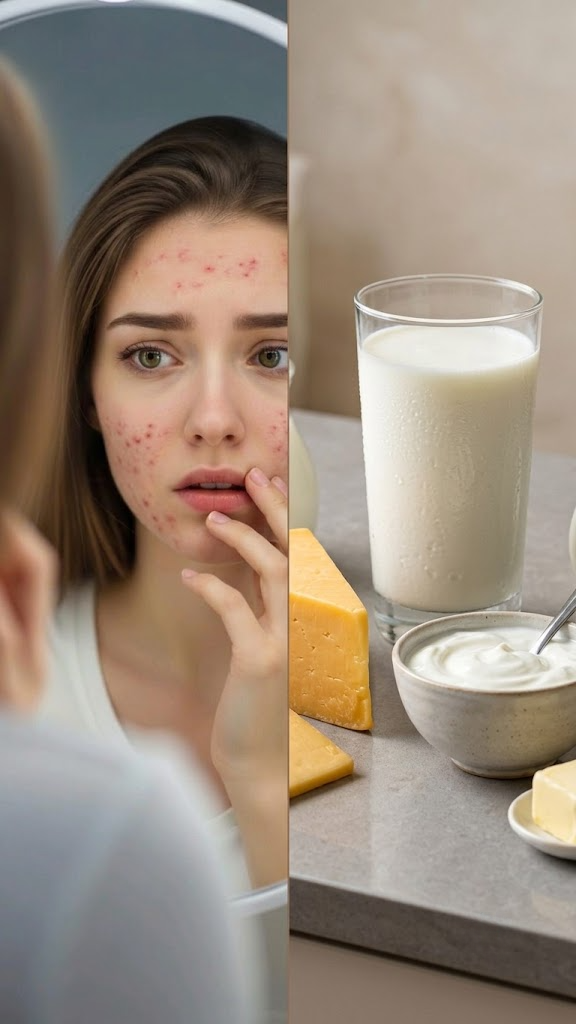
You started drinking a protein shake after every workout, and somewhere around week three your skin started fighting back. So now you are standing in front of the mirror asking, does whey protein cause acne? If you searched this hoping for a clean yes or no, I get it, but the honest answer sits somewhere in between, and it actually makes a lot of sense once you understand why.
Out of every food connected to breakouts, whey protein has some of the strongest evidence behind it, stronger even than regular milk in some ways, since it is a much more concentrated version of the same thing. That does not mean it happens to everyone who drinks a shake, but it does mean this is worth taking seriously if your skin changed after you started supplementing.
In this guide you will learn why whey protein causes acne for some people and not others; whether hydrolyzed whey protein behaves any differently; whether women react the same way men do; and how whey compares to two other foods we cover on this site: does egg cause acne, and does Greek yogurt cause acne?
TABLE OF CONTENTS
- Does Whey Protein Cause Acne? The Honest Answer
- Why Does Whey Protein Cause Acne in the First Place
- Does Hydrolyzed Whey Protein Cause Acne the Same Way
- Can Whey Protein Cause Acne in Women Specifically
- Does All Whey Protein Cause Acne, or Just Certain Types
- Does Drinking Whey Protein Cause Acne More Than Eating It in Food
- How Whey Compares to Egg and Greek Yogurt
- How to Actually Test If Whey Is Your Trigger
- FAQ
- Where This Leaves You
Does Whey Protein Cause Acne? The Honest Answer
For a real number of people, yes, whey protein can trigger or worsen acne, though it does not affect everyone who drinks it, and the research on this is genuinely mixed rather than settled.
Here is what makes whey protein different from a lot of other suspected diet triggers. It is not a vague theory floating around wellness blogs; it has actual documented cases behind it. A 2024 case control study of 201 young men at fitness centers found that 47 percent of the men with acne were using whey protein supplements, compared to just 27.7 percent of the men with clear skin. That is a meaningful gap, and it lines up with an older case series describing five teenage athletes who developed moderate to severe acne shortly after starting whey protein and improved again once they stopped.
But it is not one-sided. A separate six-month controlled trial found no significant worsening in men who were already using whey protein compared to those who were not. So the honest summary is this: whey protein has a real, plausible reason to cause acne and enough case evidence to take seriously, but it clearly does not affect every single person who uses it.
This is one of the reasons our full pillar guide on “Does Dairy Products Cause Acne?” treats whey as its own separate category rather than lumping it in with milk generally, since the concentration and dose make a real difference.
Why Does Whey Protein Cause Acne in the First Place

Why does whey protein causes acne more reliably than most other foods comes down to one hormone chain reaction that shows up again and again in the research.
The IGF 1 and Insulin Connection
Whey protein is one of the fastest-absorbing proteins there is, which is exactly why it is popular after a workout. That speed is also part of the problem. Fast-absorbing protein triggers a quicker, sharper insulin response than slower digesting proteins do. That insulin spike pushes up a hormone called IGF 1, insulin-like growth factor 1, which then increases androgens, including testosterone and a stronger related hormone called “DHT.” Those hormones tell your oil glands to produce more sebum, and more oil combined with dead skin cells is the basic recipe for clogged pores and breakouts.
It Is Still Fundamentally a Milk Byproduct
Whey is literally the liquid left over during cheese making, filtered and dried into powder form. So whenever you drink a shake, you are getting a concentrated dose of the same proteins and hormone signals found in regular milk, just without the water diluting it. That concentration is likely why whey shows a stronger effect in some studies than a plain glass of milk does.
Individual Sensitivity Still Matters Most
Not everyone reacts the same way to this hormone chain. Genetics, existing hormone balance, and how sensitive your particular skin is to androgens all play a role in whether this cascade actually shows up as acne on your face or does nothing at all. This is exactly why the research keeps coming back mixed; some people are simply more sensitive to this pathway than others.
https://www.youtube.com/watch?v=s7kFTrTrIt0
Does Hydrolyzed Whey Protein Cause Acne the Same Way

Does hydrolyzed whey protein cause acne just as much as regular whey? Not necessarily, though it is not a guaranteed fix either.
Hydrolyzed whey has already been broken down through an enzymatic process before you even drink it, which is why it absorbs even faster and is often marketed as gentler on digestion. The idea is that pre-breaking down the protein might reduce some of the inflammatory response tied to acne. In theory that sounds promising, but hydrolyzed whey still comes from the exact same milk source and still carries the same underlying hormone signals, IGF 1 included. Faster digestion does not automatically mean fewer hormone effects; it might even mean a quicker insulin spike since your body absorbs it so rapidly.
If you have tried switching to hydrolyzed whey specifically to help your skin and it has not made a difference, that would actually track with what the science suggests, since the hormone content is not meaningfully reduced just because the protein chains are shorter.
Can Whey Protein Cause Acne in Women Specifically

Can whey protein cause acne in women the same way it affects men, or is there a real difference worth knowing about?
Most of the strongest case evidence on whey and acne, including the 2024 study and the earlier teenage case series, involved young men, largely because men make up a bigger share of regular whey protein users historically. That does not mean women are unaffected; it mostly means women are understudied in this specific area.
There is a reasonable case that women could actually be more sensitive to this trigger in certain situations, not less. Whey’s effect runs through androgen hormones like testosterone and DHT, and women dealing with hormonal acne, the kind that shows up along the jawline before your period, already have skin that is more reactive to androgen shifts. Adding a daily dose of whey on top of that existing hormonal sensitivity could plausibly tip things further for some women, even though dedicated research specifically on women and whey protein and acne is still thin.
If you are a woman who started a whey-based routine and noticed your hormonal breakouts getting worse specifically, that pattern is worth paying attention to, even without a large study confirming it yet.
Does All Whey Protein Cause Acne, or Just Certain Types
Does all whey protein cause acne equally, or do some forms carry more risk than others? Not equally, and this is genuinely one of the more useful things to understand if you do not want to give up protein shakes entirely.
Whey Protein Concentrate
This is the least processed and most common form, and it retains the highest amount of lactose, milk fat, and hormone-active compounds. If any form is going to trigger a reaction, concentrate is the most likely candidate.
Whey Protein Isolate

Isolate goes through extra filtering that strips out most of the lactose and milk fat, leaving a purer protein. It still carries the core growth factors, including IGF 1, so it is not hormone-free, but it may be a gentler option for people who react strongly to concentrate.
Hydrolyzed Whey
As covered above, this form is predigested for faster absorption. It does not necessarily reduce hormone content, so treat it as a middle ground option rather than a guaranteed solution.
Comparison Table: Whey Protein Types and Acne Risk
| Whey Type | Lactose and Fat Content | Hormone Activity | Acne Risk Level |
|---|---|---|---|
| Whey concentrate | Highest | Highest | Highest risk |
| Whey isolate | Low | Still present | Moderate risk |
| Hydrolyzed whey | Low | Still present | Moderate risk, faster absorption |
| Egg white protein | None, not dairy | None | Low risk |
| Pea or hemp protein | None, plant based | None | Low risk |
Does Drinking Whey Protein Cause Acne More Than Eating It in Food

Does drinking whey protein cause acne more than getting whey in its natural food form, like in a glass of milk or a scoop mixed into yogurt? Yes, likely, and the reason comes down to speed and concentration again.
A liquid shake absorbs into your system fast, which means a faster, sharper insulin and IGF 1 spike than the same amount of protein eaten more slowly as part of a meal. Drinking whey on an empty stomach right after a workout, which is exactly when most people do it, likely amplifies this effect even more, since there is nothing else in your stomach slowing down absorption.
This is part of why whey protein shows up as a stronger suspected trigger in research than whole dairy foods generally. It is not just that whey is present; it is that you are drinking a large, fast absorbing dose of it in one sitting, often daily, right when your insulin response is primed to spike hardest.
How Whey Compares to Egg and Greek Yogurt

Since you are already digging into diet and your skin, it helps to see why next to two other foods people commonly ask about.
Does egg cause acne the way whey does? Not really. Eggs do not carry the same concentrated hormone profile as milk derived whey, and current research does not show a strong link between eggs and acne for most people. If you are choosing a protein source and worried about your skin, eggs currently have the more reassuring track record by a wide margin.
Does Greek yogurt cause acne in the same way whey protein might? Also unlikely for most people. Greek yogurt goes through a straining process that removes a large portion of the liquid whey before it ever reaches your spoon, which is the opposite of what happens with whey protein powder, where that same whey is the entire product, concentrated and dried. If cheese and yogurt showed no significant link to acne in the larger research on dairy, it makes sense that whey protein, essentially the isolated, concentrated part they remove, would show the stronger effect.
How to Actually Test If Whey Is Your Trigger
Cut whey completely for three to four weeks, since that is roughly how long it takes for hormone driven acne to actually clear from your skin.
Switch to a non-whey source during this window, like egg white protein, pea protein, or hemp protein, so you are not losing your daily protein intake while testing.
Take a weekly photo in the same lighting, since it is genuinely hard to remember accurately how your skin looked a month ago.
Reintroduce whey on its own after the month, ideally the same type and amount you were using before, and watch closely over the following two weeks.
If your skin clearly worsens again after reintroducing it, that is about as close to a confirmed personal answer as you can get without a lab test.
Frequently Asked Questions
Does whey protein cause acne for everyone who uses it?
No. It has real, documented cases behind it, but a controlled trial found no worsening in some users, meaning individual hormone sensitivity plays a bigger role than the protein itself.
Why does whey protein cause acne more than other proteins?
Whey absorbs quickly, triggering a sharp insulin and IGF 1 spike that increases oil production. Its concentrated, fast digesting nature makes this hormone response stronger than slower proteins typically cause.
Does hydrolyzed whey protein cause acne less than regular whey?
Not necessarily. It absorbs even faster due to pre digestion, and still carries the same core hormone signals, so it is not a guaranteed safer option for acne prone skin.
Can whey protein cause acne in women specifically?
It can. Women with hormonal acne may be especially sensitive, since whey’s effect runs through androgen hormones already tied to jawline and cycle related breakouts.
Does all whey protein cause acne equally?
No. Whey concentrate carries the most lactose and hormone activity, while isolate and hydrolyzed versions are more filtered, potentially making them somewhat gentler on sensitive skin.
Does drinking whey protein cause acne more than eating dairy normally?
Likely yes. A liquid shake absorbs faster and is more concentrated than whey naturally found in food, creating a sharper hormone spike than typical dietary dairy intake.
Where This Leaves You

So, does whey protein cause acne? For a real portion of people, yes, largely because it delivers a fast, concentrated dose of the same hormones that make milk a suspected trigger, just amplified. It does not happen to everyone, and the research remains genuinely mixed, but the mechanism is well understood, and the case evidence is hard to ignore if your skin changed after you started supplementing.
Three things to take with you. Whey concentrate carries the highest risk; switching to isolate or a non-dairy protein is a reasonable first test, and drinking whey as a fast liquid shake likely amplifies the effect compared to whey eaten slowly as part of food.
If protein and your skin are both on your mind, our full guide on does dairy products cause acne covers where milk, cheese, and yogurt all fit into this same picture, and it is the best place to start if you want the complete story before making any changes to your diet.



Post Comment