Keto Mini Cheesecake: Easy Low-Carb Recipe
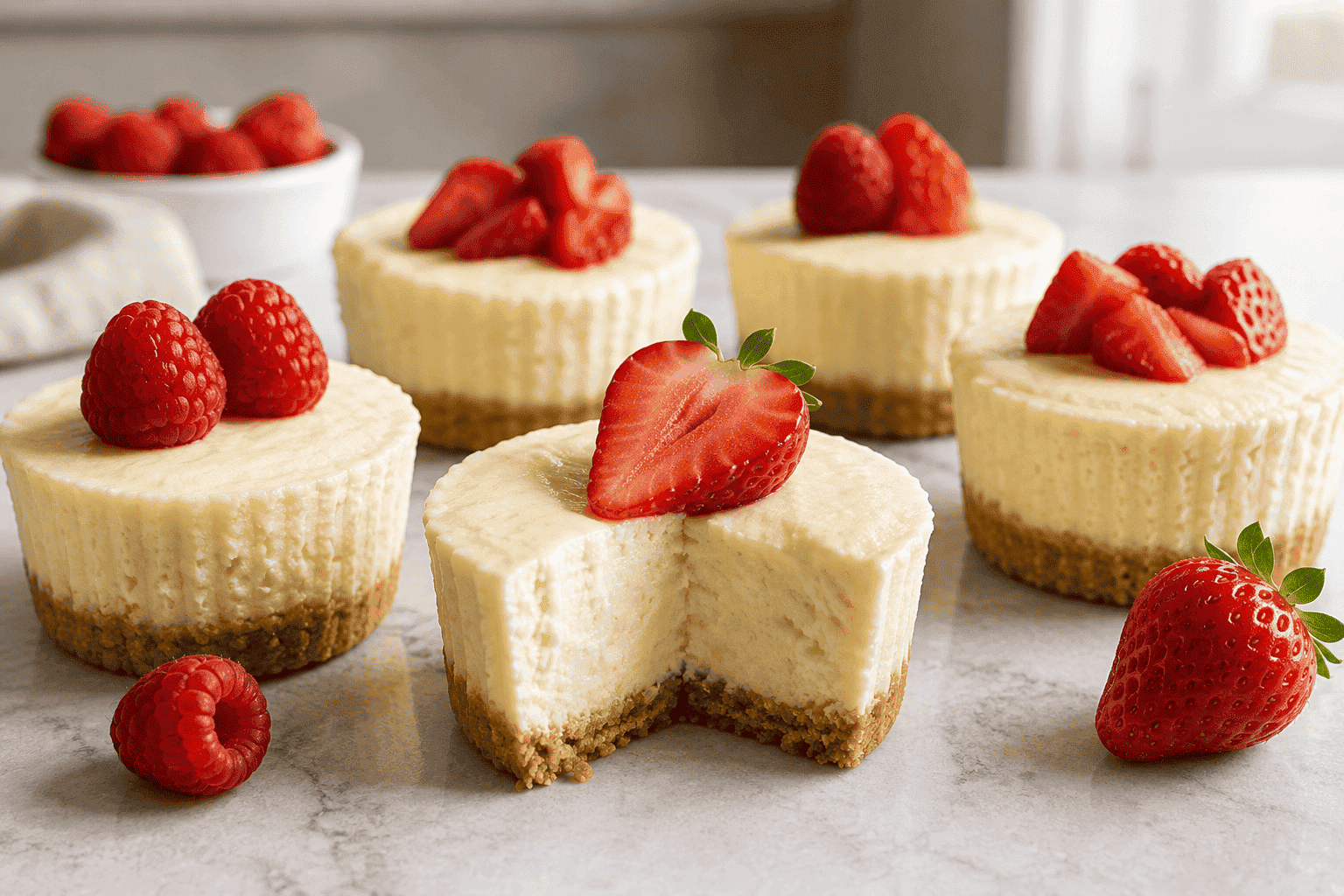
A keto mini cheesecake gives you the creamy texture of traditional cheesecake without making an entire full-size cake. The small portions also make it easier to control the crust, sweetener, toppings, and overall carbohydrate content.
If you’re building a collection of keto desserts recipes, this is a useful one to keep in rotation. The basic method is simple: make a low-carb crust or skip it, prepare a cream cheese filling, chill until firm, and add a small amount of fruit or another topping.
Table of Contents
- What Makes a Keto Mini Cheesecake?
- Keto Mini Cheesecake Ingredients
- How to Make Keto Mini Cheesecakes
- No-Bake or Baked: Which Works Better?
- Choosing a Low-Carb Cheesecake Crust
- Sweeteners and Sugar Alcohols
- Topping Ideas That Keep Carbs Reasonable
- How to Store and Serve Mini Cheesecakes
- Common Mistakes to Avoid
- Frequently Asked Questions
- Key Takeaways
Keto Mini Cheesecake
What Makes a Keto Mini Cheesecake?
A keto mini cheesecake is simply a smaller cheesecake made with ingredients chosen to keep carbohydrate intake relatively low. There isn’t one official FDA definition of a “keto” dessert, so the actual nutrition depends on the recipe and serving size.
A typical version uses cream cheese, eggs or whipped cream, a low- or no-sugar sweetener, and a crust made without regular flour. Some recipes are baked, while others set in the refrigerator.
The small format is practical. You can make individual portions instead of cutting slices from a large cheesecake, which makes serving sizes easier to judge.
What Makes It Different From Regular Cheesecake?
Traditional cheesecake often contains a graham cracker crust and sugar in the filling. A lower-carb version usually changes one or both.
The easiest adjustment is replacing the sugar with a suitable sweetener and using a nut-based crust, a seed-based crust, or no crust at all.
That doesn’t automatically make the dessert low in calories. Cream cheese, heavy cream, butter, nuts, and nut butter can all contribute substantial calories.
Keto Mini Cheesecake Ingredients
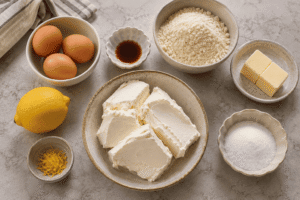
A good keto mini cheesecake recipe doesn’t need a long ingredient list. The filling can be built from a few basic ingredients.
Cream Cheese
Full-fat cream cheese gives the filling its familiar cheesecake texture and tang.
Use softened cream cheese rather than mixing it straight from the refrigerator. Softened cream cheese blends more easily and is less likely to leave small lumps.
Sweetener
The sweetener affects both flavor and texture.
Common choices include erythritol, monk fruit blends, stevia, and other reduced-sugar sweeteners. Check the product label because blends can contain different ingredients and carbohydrate amounts.
FDA notes that sugar alcohols are a separate class of sweeteners and can appear in sugar-free and reduced-sugar foods. Some people also experience digestive symptoms when consuming larger amounts.
Eggs or Whipped Cream
Baked versions commonly use eggs to help the filling set.
No-bake versions often rely on whipped heavy cream, gelatin, or another setting method to create a firm texture after chilling.
Vanilla and Lemon
A small amount of vanilla extract adds depth, while lemon juice or zest can sharpen the cream cheese flavor.
These ingredients don’t need to dominate the recipe. The cheesecake should still taste like cheesecake.
How to Make Keto Mini Cheesecakes
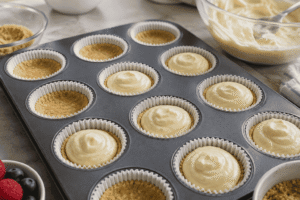
The basic method is straightforward: prepare the base, mix the filling, portion it into small molds, and chill or bake according to the recipe.
Step 1: Prepare the Crust
For a simple crust, combine finely ground almonds with melted butter and a small amount of sweetener.
Press a thin layer into each cavity of a mini cheesecake pan or muffin tin lined with suitable liners.
Don’t make the crust too thick. A heavy nut crust can add more calories than expected and overpower the filling.
Step 2: Make the Filling
Beat softened cream cheese until smooth.
Add the sweetener gradually, then mix in vanilla and any other flavoring. For a baked version, add the eggs one at a time and avoid overmixing once they’re incorporated.
For a no-bake version, fold in properly whipped cream if the recipe calls for it.
Step 3: Portion the Mixture
Divide the filling evenly between the prepared portions.
This is one advantage of making individual cheesecakes: every serving starts with roughly the same amount of filling.
Step 4: Chill or Bake
A baked version needs enough time to set without becoming dry.
A no-bake version needs adequate refrigeration before serving. Don’t rush this stage. A cheesecake that looks soft immediately after preparation can firm considerably after several hours in the refrigerator.
No-Bake or Baked: Which Works Better?
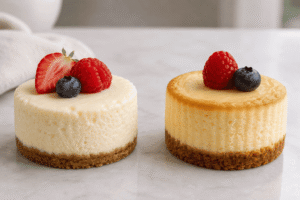
Both methods can work well, but they produce different results.
| Method | Texture | Main advantage |
|---|---|---|
| No-bake | Soft and creamy | Little to no oven time |
| Baked | Firmer and denser | More traditional cheesecake texture |
When No-Bake Makes More Sense
Choose no-bake when you want a quick dessert and prefer a softer, mousse-like filling.
The method is also useful during hot weather when you don’t want to turn on the oven.
When Baking Is Better
Baking gives you a firmer center and a texture closer to classic cheesecake.
It’s also easier to create flavors such as vanilla bean, lemon, pumpkin, or chocolate without relying heavily on a whipped filling.
Choosing a Low-Carb Cheesecake Crust
The crust is often where a cheesecake recipe picks up extra carbohydrates.
A standard graham cracker crust won’t fit every lower-carb eating plan, so alternatives are useful.
Almond Flour Crust
Almond flour mixed with melted butter is one of the simplest options.
It creates a crumbly base with a mild nutty flavor that works well with vanilla, berry, and chocolate fillings.
Coconut-Based Crust
Unsweetened shredded coconut can be combined with butter or another suitable ingredient to make a lightly textured base.
Check the package carefully because sweetened coconut contains added sugar.
No Crust
Skipping the crust is the simplest way to reduce the ingredients and preparation time.
A crustless version can still feel like a proper dessert if you finish it with berries, lemon zest, cocoa, or a small amount of dark chocolate.
This approach also works well when you’re looking for no carb dessert recipes, although a literal zero-carbohydrate result is difficult to achieve with ordinary dairy-based ingredients.
Sweeteners and Sugar Alcohols
Sugar substitutes can make a cheesecake lower in sugar, but they aren’t interchangeable.
Erythritol is a sugar alcohol, while monk fruit extract is a high-intensity sweetener derived from monk fruit. FDA classifies these as different types of sweetening ingredients.
Read the ingredient list instead of assuming that a product labeled “keto” contains only one type of sweetener.
What About Sugar Alcohols?
Sugar alcohols can be useful in lower-sugar desserts, but tolerance varies.
Some sugar alcohols may cause gas, bloating, or diarrhea when consumed in larger amounts. FDA specifically advises checking the Nutrition Facts label and ingredient list when choosing products containing sugar alcohols.
That matters when you’re making several individual cheesecakes. A small amount per serving can become a much larger amount if you eat multiple portions.
Topping Ideas That Keep Carbs Reasonable
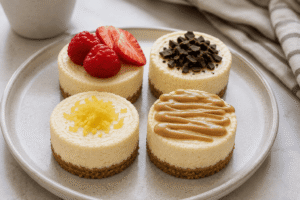
The topping can change the nutrition profile of a small cheesecake more than you might expect.
Fresh Berries
Raspberries, strawberries, and blackberries add color and acidity without requiring a sugary sauce.
Use a modest portion rather than covering the entire surface with fruit.
Dark Chocolate
A small amount of chopped dark chocolate works particularly well with chocolate or vanilla cheesecake.
Check the Nutrition Facts label because cocoa percentage alone doesn’t tell you the total carbohydrate or added sugar content.
Lemon Zest
Fresh lemon zest is one of the easiest ways to add flavor without needing a sweet topping.
It works especially well with a plain vanilla filling.
Peanut or Almond Butter
A small drizzle can turn a basic cheesecake into a richer dessert.
Choose a product without added sugar if that fits your eating plan, and remember that nut butters are calorie dense.
How to Store and Serve Mini Cheesecakes
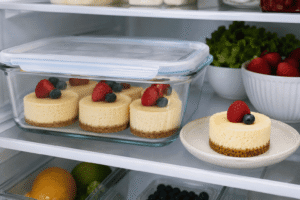
Keep cheesecake refrigerated because the filling commonly contains perishable dairy and, in baked versions, eggs.
The FDA recommends keeping a refrigerator at 40°F (4°C) or below and refrigerating perishable foods within two hours.
For the Best Texture
Take a refrigerated cheesecake out shortly before serving.
A very cold cheesecake can taste firmer and less creamy than one that has rested briefly at a safe temperature.
Don’t leave dairy-based cheesecake sitting at room temperature for an extended period, especially during warm weather.
Can You Freeze Them?
Yes, individual cheesecakes can generally be frozen when properly wrapped and stored.
Freeze them without delicate fresh toppings when possible. Add berries, zest, or other toppings after thawing for a better texture.
Common Mistakes to Avoid
Using Too Much Sweetener
More sweetener doesn’t necessarily make cheesecake taste better.
Some sweeteners can leave a cooling sensation or aftertaste, especially at higher amounts.
Overloading the Crust
A thick almond or coconut crust can make an individual cheesecake surprisingly heavy.
Keep the base thin enough to support the filling without competing with it.
Cutting Portions Too Large
Mini doesn’t automatically mean low calorie.
Cream cheese, butter, heavy cream, nuts, and chocolate can all be energy dense. Keep the serving size consistent if you’re tracking your intake.
Assuming “Sugar-Free” Means “Carb-Free”
A product can contain little or no sugar while still contributing carbohydrates from other ingredients.
Check total carbohydrate, serving size, fiber, and sugar alcohol information on the label rather than relying on the front-of-package claim. FDA’s Nutrition Facts guidance separates these nutrients so consumers can compare products more accurately.
How Keto Mini Cheesecakes Fit Into a Low-Carb Dessert Plan
A small cheesecake can be useful when you want a portioned dessert rather than a large baked treat.
If you’re already eating low carb desserts, the same basic approach applies pay attention to the whole recipe rather than one ingredient.
A dessert can be low in carbohydrates and still be high in calories, saturated fat, or sodium.
For someone following a ketogenic eating pattern, the relevant carbohydrate target also varies by individual. Don’t assume that every dessert labeled “keto” automatically fits your personal daily intake.
What About No-Carb Desserts?
The phrase no carb dessert recipes is common in search, but literal zero-carb desserts are difficult to make from ingredients such as cream cheese, eggs, cream, berries, or milk.
A more useful approach is to look at the actual carbohydrate amount per serving and compare it with your own target.
Frequently Asked Questions
How many carbs are in a keto mini cheesecake?
There isn’t one fixed amount. The carbohydrate content depends on the cream cheese, sweetener, crust, toppings, and portion size. Calculate the recipe from the specific ingredients you use rather than copying a number from another cheesecake.
Can I make a keto mini cheesecake without a crust?
Yes. A crustless version is simple and can reduce preparation time and carbohydrate content. You can finish it with lemon zest, berries, cocoa, or a small amount of dark chocolate.
Can I use regular cream cheese?
Yes. Regular cream cheese can work well in a lower-carb cheesecake. Check the Nutrition Facts label because products and serving sizes differ.
What sweetener is best for mini cheesecakes?
There isn’t one best choice for everyone. Erythritol, monk fruit blends, and other reduced-sugar sweeteners can work, but they differ in sweetness, texture, and aftertaste.
Can I make a mini keto cheesecake without baking?
Yes. No-bake keto mini strawberry cheesecakes are one option. A chilled cream cheese filling can be combined with strawberries or another small fruit portion, depending on your carbohydrate target.
How long do mini cheesecakes last in the refrigerator?
Storage time depends on the recipe and ingredients. Keep them refrigerated and follow the storage guidance for the specific ingredients used. For food safety, keep the refrigerator at 40°F or below.
Can I use these as low carb sweet snacks?
Yes, a small cheesecake can work as an occasional low carb sweet snacks option, particularly when it’s portioned individually. Just remember that low carbohydrate doesn’t automatically mean low calorie.
Can I make a mini keto cheesecake with fruit?
Yes. Berries are a common choice because a small portion can add acidity and sweetness without requiring a sugary sauce. Keep the amount consistent if you’re tracking carbohydrates.
Key Takeaways
A keto mini cheesecake works best when you control the ingredients and the portion rather than relying on a “keto” label.
Use softened cream cheese, choose a sweetener that agrees with you, keep the crust modest, and check the actual nutrition information when carbohydrate intake matters.
For a wider dessert selection, your low carb desserts collection can cover brownies, cookies, puddings, and other options, while low carb sweet snacks are better suited to smaller everyday portions.
And if you’re looking for a broader selection of keto desserts recipes, this mini cheesecake is a useful starting point because the same principles carry across many other recipes: control the sweetener, watch portions, and calculate the finished recipe rather than assuming every ingredient labeled “keto” has the same nutritional value.


3 comments