High Fiber Breakfast Foods: 15 Quick Meals for Lasting Energy
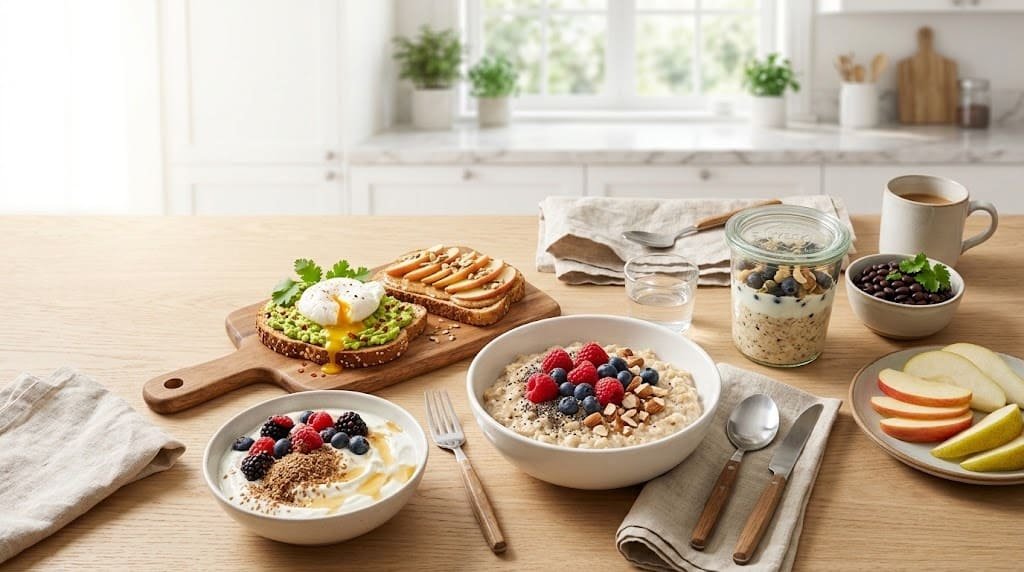
Most people who feel sluggish by 10:00 AM aren’t suffering from a lack of caffeine—they’re experiencing a blood sugar crash caused by a low-fiber breakfast. Typical morning options like bagels, pastries, and sugary cereals digest rapidly, dumping glucose into your bloodstream before leaving you hungry and unfocused just two hours later.
Fixing this mid-morning slump doesn’t require a total diet overhaul, just a smarter choice of high fiber breakfast foods that slow down digestion. Adding simple staples like chia seeds, oats, or fresh berries to your morning routine stabilizes your energy, keeps you full until lunch, and supports long-term gut health.
Table of Contents
-
Why Most Breakfasts Fail to Keep You Full
-
What Counts as a High Fiber Breakfast?
-
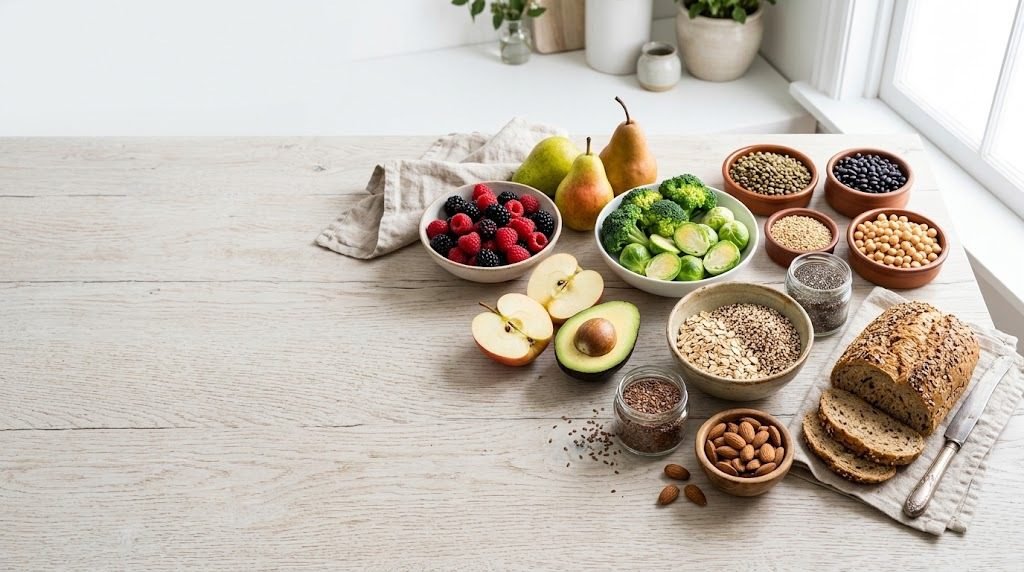
Top High Fiber Breakfast Foods to Stock in Your Kitchen
-
Quick and Easy High Fiber Breakfast Ideas
-
High Fiber Breakfast Meals for Weight Management and Gut Health
-
Nutrition Comparison: Popular High Fiber Foods
-
Common Fiber Mistakes That Cause Bloating
-
Frequently Asked Questions
-
Key Takeaways for Building High Fiber Breakfasts
Why Most Breakfasts Fail to Keep You Full
Most traditional breakfast foods cause sharp blood sugar spikes followed by mid-morning energy crashes because they digest too quickly.
-
- Rapid Digestion: Processed carbs like pastries, bagels, and sugary cereals absorb too quickly into your bloodstream.
- Energy Crashes: Rapid glucose spikes lead to sharp insulin drops, causing mid-morning fatigue.
- Missing Nutrients: The real issue isn’t low calories—it’s a lack of dietary fiber and protein.
- Sustained Energy: High-fiber breakfasts delay stomach emptying, feed healthy gut bacteria, and stop mid-morning cravings.
- Long-Term Habits: Shifting to whole foods makes it easy to incorporate High Fiber Foods into your daily routine.
What Counts as a High Fiber Breakfast?

-
The Target: Aim for 8 to 10 grams of fiber at breakfast (about one-third of your daily needs).
-
The Gap: Over 90% of Americans miss daily fiber targets (22–34 grams per day depending on age and sex).
Daily Targets at a Glance
-
Women (19–50 yrs): 25–28 grams / day
-
Men (19–50 yrs): 31–34 grams / day
-
Breakfast Target: 8–12 grams per meal
The Two Types of Fiber
-
Soluble Fiber: Dissolves in water to form a gel, slowing carb absorption and curbing cholesterol (e.g., oats, chia seeds, apples).
-
Insoluble Fiber: Attracts water to build stool bulk and keep digestion moving smoothly (e.g., wheat bran, nuts, leafy greens).
Top High Fiber Breakfast Foods to Stock in Your Kitchen
-
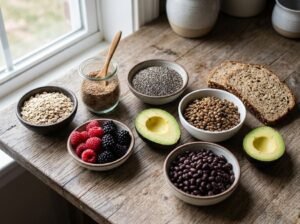
Chia Seeds (10g fiber per 2 tbsp): Swells up to ten times its weight in liquid, perfect for puddings and smoothies.
-
Flaxseeds (3g fiber per tbsp, ground): Packs omega-3s and lignans; mixes easily into yogurt or oatmeal.
-
Rolled or Steel-Cut Oats (4g fiber per 1/2 cup dry): Rich in beta-glucan, a soluble fiber that supports heart health.
-
Raspberries & Blackberries (8g fiber per cup): Low-sugar fruits loaded with seed-based dietary fiber.
-
Avocado (5g fiber per 1/2 fruit): Combines healthy monounsaturated fats with rich soluble fiber.
-
Lentils & Black Beans (7–8g fiber per 1/2 cup cooked): Excellent savory picks packed with complex carbs and plant protein.
-
Sprouted Whole Grain Bread (4–6g fiber per slice): Look for 100% whole grain or sprouted wheat listed as the first ingredient.
Quick and Easy High Fiber Breakfast Ideas

When time is limited, morning preparation needs to be simple. These easy high fiber breakfast options take less than ten minutes to prepare or can be prepped the night before.
1. Overnight Chia & Berry Oats (11g Fiber)
Combine 1/2 cup of rolled oats, 1 tablespoon of chia seeds, 1 cup of unsweetened almond milk, and 1/2 cup of fresh raspberries in a glass jar. Shake well and leave in the fridge overnight. In the morning, top with a spoonful of pumpkin seeds for added crunch.
2. High-Fiber Protein Smoothie (9g Fiber)
Blend 1 cup of unsweetened soy milk, 1 scoop of plant protein powder, 1 cup of frozen blackberries, 1 cup of baby spinach, and 1 tablespoon of ground flaxseed. This provides a portable quick high fiber breakfast for long commutes.
3. Savory Black Bean & Avocado Toast (10g Fiber)
Toast two slices of sprouted whole-grain bread. Mash 1/2 an avocado with lemon juice and spread across the toast. Top with 1/3 cup of rinsed black beans, warm salsa, and a poached egg.
High Fiber Breakfast Meals for Weight Management and Gut Health

-
Natural Satiety: High-volume fiber physical fills your stomach and releases fullness hormones (GLP-1 and PYY).
-
Calorie Control: Adding High Fiber Foods for Weight Loss helps you stay satisfied on fewer total calories while protecting muscle mass.
-
Gut Motility: If your system feels sluggish, using High Fiber Foods for Constipation—like warm oatmeal, flax, or prunes—draws water to the colon to restart regular digestion.
-
Afternoon Stability: Combining a solid breakfast strategy with smart High Fiber Snacks (like almonds or apple slices with peanut butter) stops energy dips before dinner.
Nutrition Comparison: Popular High Fiber Foods
Understanding the exact breakdown of your breakfast components helps tailor fiber intake to personal health targets.
| Breakfast Food Item | Serving Size | Fiber (g) | Protein (g) | Key Fiber Type |
|---|---|---|---|---|
| Chia Seeds | 2 tbsp (28g) | 10.0g | 4.7g | Soluble & Mucilage |
| Raspberries | 1 cup (123g) | 8.0g | 1.5g | Insoluble |
| Cooked Black Beans | 1/2 cup (86g) | 7.5g | 7.6g | Soluble & Resistant Starch |
| Green Peas | 1/2 cup (80g) | 4.4g | 4.3g | Insoluble |
| Rolled Oats (Dry) | 1/2 cup (40g) | 4.0g | 5.0g | Soluble (Beta-Glucan) |
| Avocado | 1/2 medium (100g) | 5.0g | 1.3g | Soluble & Insoluble |
| Sprouted Wheat Bread | 1 slice (34g) | 3.0g | 5.0g | Insoluble |
| Medium Apple (with skin) | 1 medium (182g) | 4.4g | 0.5g | Soluble (Pectin) |
Common Fiber Mistakes That Cause Bloating
- Skipping Water: Fiber needs liquid to move. Drinking less than 16 oz of water with high-fiber meals can lead to constipation.
- Rushing the Process: Jumping from 10g to 35g of daily fiber overnight overburdens gut bacteria. Increase intake slowly by 3–5g every few days.
- Overusing Synthetic Additives: Processed fiber bars with isolated fibers (like inulin or chicory root) often cause sharp gas and bloating compared to real, intact whole foods.
Frequently Asked Questions
1. What is the best high fiber breakfast for quick weight loss?
Steel-cut oatmeal topped with chia seeds, berries, and a side of Greek yogurt. This delivers soluble fiber with lean protein to stabilize blood sugar, curbing mid-morning hunger and preventing late-day overeating.
2. How many grams of fiber should I aim for at breakfast?
Target between 8 and 12 grams of dietary fiber in your morning meal. Hitting this window secures roughly one-third of your daily needs early on, setting a strong base for healthy digestion.
3. Can I get enough morning fiber without eating grains or wheat?
Yes, you can easily reach your goals using seeds, fruit, avocado, and legumes. Chia puddings, berry smoothies, and savory black bean hashes deliver rich fiber and complex carbs without a single grain.
4. Do eggs contain dietary fiber?
No, eggs contain zero dietary fiber. Fiber comes exclusively from plant foods. Pair your eggs with spinach, avocado, or whole-grain toast to round out the meal.
5. What is the main difference between soluble and insoluble fiber?
Soluble fiber forms a gel to slow digestion; insoluble fiber adds stool bulk. Soluble fiber manages cholesterol and satiety, while insoluble fiber keeps digestion moving smoothly. Eat a mix of both.
6. Are store-bought high-fiber bars a good breakfast replacement?
No, whole foods are much better than packaged fiber bars for daily nutrition. Many commercial bars rely on isolated fibers like chicory root, which trigger bloating and gas while hiding extra sugars and saturated fats.
7. Does drinking water matter when eating a high-fiber breakfast?
Yes, extra fluids are required to help dietary fiber work properly. Fiber absorbs water to move smoothly through your digestive tract. Eating high-fiber meals without fluids can cause cramping.
Key Takeaways for Building High Fiber Breakfasts
-
Hit the 10-Gram Mark: Aim for 8–12g of fiber at breakfast to easily cover one-third of your daily goal.
-
Stick to Whole Foods: Prioritize real seeds, berries, legumes, and grains over packaged fiber bars with synthetic additives.
-
Add Protein and Healthy Fats: Pair fiber with eggs, yogurt, nuts, or avocado to maximize satiety and lock in blood sugar control.
-
Hydrate Constantly: Increase your water intake alongside fiber to keep digestion comfortable and smooth.


1 comment