Calories in Cooked Ground Turkey: Complete 2026 Guide
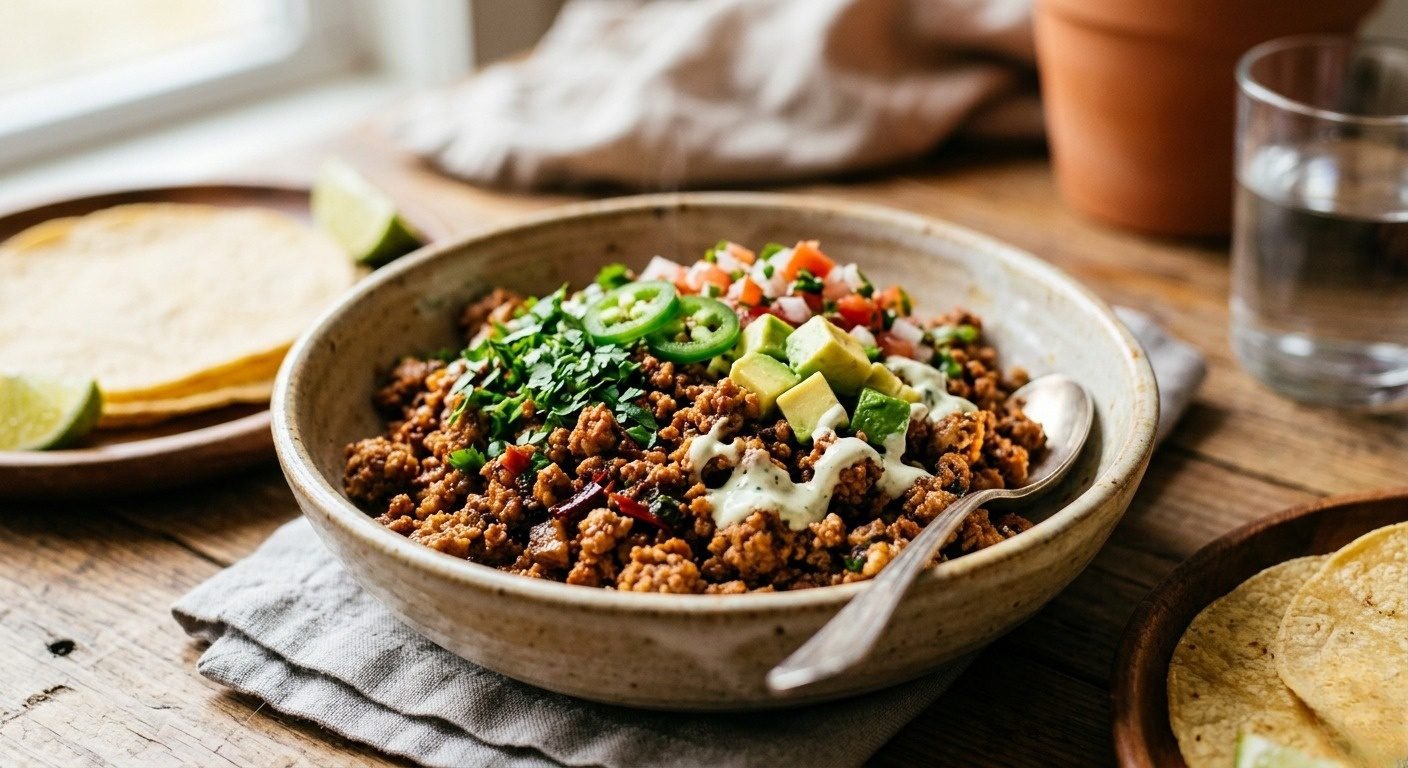
Did you know that calories in cooked ground turkey can range anywhere from 155 to over 254 per 100 grams depending entirely on the fat ratio and how you cook it? Surprisingly, that kind of range surprises a lot of people who assume all ground turkey is basically the same lean, clean protein.
Ground turkey has become one of the most popular proteins in American kitchens, and for very good reason. It is affordable, versatile, and sits right at the intersection of healthy eating and everyday cooking. But those numbers on the front of the package only tell part of the story. The real calorie count depends on whether you grabbed the 85/15 or the 93/7 bag, how you cooked it, and whether you drained the fat afterward.
Table of Contents
- What Affects the Calories in Cooked Ground Turkey
- How Many Calories in Cooked Ground Turkey by Fat Ratio
- Calories in 1 Cup of Cooked Ground Turkey
- Calories in Cooked Ground Turkey 93/7 Explained
- Ground Turkey Nutrition Beyond Calories
- How Cooking Method Changes the Calorie Count
- Cooked Ground Turkey vs Other Proteins
- How to Track Calories in Cooked Ground Turkey Accurately
- FAQ: People Also Ask
- Conclusion
What Affects the Calories in Cooked Ground Turkey
Calories in cooked ground turkey are not a single fixed number you can memorize and move on from. Four variables control the final figure, and understanding them will save you from constant calorie confusion at mealtime.
Fat Ratio Is the Biggest Variable
Ground turkey comes in several fat-to-lean ratios. The most common ones you will see at any major grocery store are 85/15, 93/7, and 99/1. The first number is the percentage of lean meat. The second is fat. Since fat contains more than twice the calories per gram that protein does (9 calories per gram versus 4), the fat ratio directly controls the calorie density of whatever ends up on your plate.
According to the USDA FoodData Central database, updated in 2025, a 100 gram portion of 85/15 cooked ground turkey carries about 218 calories, while the same 100 gram portion of 93/7 comes in at around 176. That 40-calorie difference feels small in any single meal, but across a week of cooking it adds up to several hundred calories, which is meaningful if you are watching your intake closely.
Raw Weight vs Cooked Weight Matters Enormously
This is the most common calorie tracking mistake people make with ground turkey. Meat loses water and fat during cooking. A 4-ounce raw portion typically shrinks to about 3 ounces when fully cooked, which concentrates the calories per gram. As a result, if you weigh your turkey after cooking, you need to use cooked nutrition data.
Added Ingredients Change Everything
Plain cooked ground turkey is very different from seasoned taco meat with salsa, oil, and onions mixed in. Therefore, always track cooking additions separately. And if you are curious about exactly how to cook ground turkey the right way on the stovetop to control fat and flavor, our step-by-step stovetop guide walks through every detail.
How Many Calories in Cooked Ground Turkey by Fat Ratio
How many calories in cooked ground turkey depends almost entirely on which product you pick up at the store. Below is a comprehensive breakdown using USDA FoodData Central 2025 data. All figures are for cooked, unseasoned ground turkey with no added oil.

85/15 Cooked Ground Turkey Calories
The 85/15 blend is the most widely available variety in American grocery stores and is often labeled simply as ground turkey with no special lean designation. It has a fuller flavor because of its higher fat content, and it browns more easily than leaner blends. For instance,
Per 100 grams cooked: 218 calories, 27 g protein, 12 g fat, and 0 g carbohydrates.
And per 3.5 ounce cooked serving: approximately 218 calories.
Per 4-ounce cooked serving: approximately 247 calories.
93/7 Cooked Ground Turkey Calories
The 93/7 blend is the sweet spot for most health-focused cooks. It is lean enough to keep calories meaningfully lower than the 85/15, but it still has enough fat to cook and brown without turning dry.
Per 100 grams cooked: 176 calories, 29 g protein, 7 g fat, and 0 g carbohydrates.
And per 3-ounce cooked serving: approximately 149 calories.
Per 4-ounce cooked serving: approximately 199 calories.
99/1 Extra-Lean Cooked Ground Turkey Calories
The 99/1 blend is the lowest-calorie option and is popular with bodybuilders and athletes during a cutting phase. That said, the trade-off is that it can get dry very quickly if you overcook it, so it works best in dishes with plenty of sauce or moisture.
Per 100 grams cooked: 155 calories, 30 g protein, 3 g fat, and 0 g carbohydrates.
And per 3-ounce cooked serving: approximately 131 calories.
Per 4-ounce cooked serving: approximately 175 calories.
Quick Reference Calorie Comparison by Fat Ratio
| Fat Ratio | Per 100g Cooked | Per 3oz Cooked | Per 4oz Cooked | Per 1 Cup Cooked |
|---|---|---|---|---|
| 85/15 | 218 cal | 185 cal | 247 cal | 296 cal |
| 93/7 | 176 cal | 149 cal | 199 cal | 238 cal |
| 99/1 | 155 cal | 131 cal | 175 cal | 209 cal |
Calories in 1 Cup of Cooked Ground Turkey
“Calories in 1 cup of cooked ground turkey” is one of the most searched questions on this entire topic, and the answer requires one small but critical clarification: cups measure volume, not weight. Cooked ground turkey is a crumbled, irregular food that packs completely differently depending on how tightly you fill the cup.
What Does One Cup of Cooked Ground Turkey Weigh?
Based on USDA standard reference measurements and culinary testing, one cup of loosely packed, cooked crumbled ground turkey weighs approximately 130 to 140 grams. The most commonly accepted middle estimate is 135 grams, and that is what the numbers in this guide use.
How many calories in a cup of cooked ground turkey, then, looks like this:
- One cup of 85/15 cooked ground turkey: approximately 294 to 306 calories, midpoint around 296 calories.
- One cup of 93/7 cooked ground turkey: approximately 232 to 244 calories, midpoint around 238 calories.
- One cup of 99/1 cooked ground turkey: approximately 203 to 216 calories, midpoint around 209 calories.
Calories in 1 Cup by Fat Ratio
| Fat Ratio | Loose Cup (~115g) | Standard Cup (~135g) | Packed Cup (~160g) |
|---|---|---|---|
| 85/15 | 251 cal | 296 cal | 349 cal |
| 93/7 | 202 cal | 238 cal | 282 cal |
| 99/1 | 178 cal | 209 cal | 248 cal |
Calories in Cooked Ground Turkey 93/7 Explained
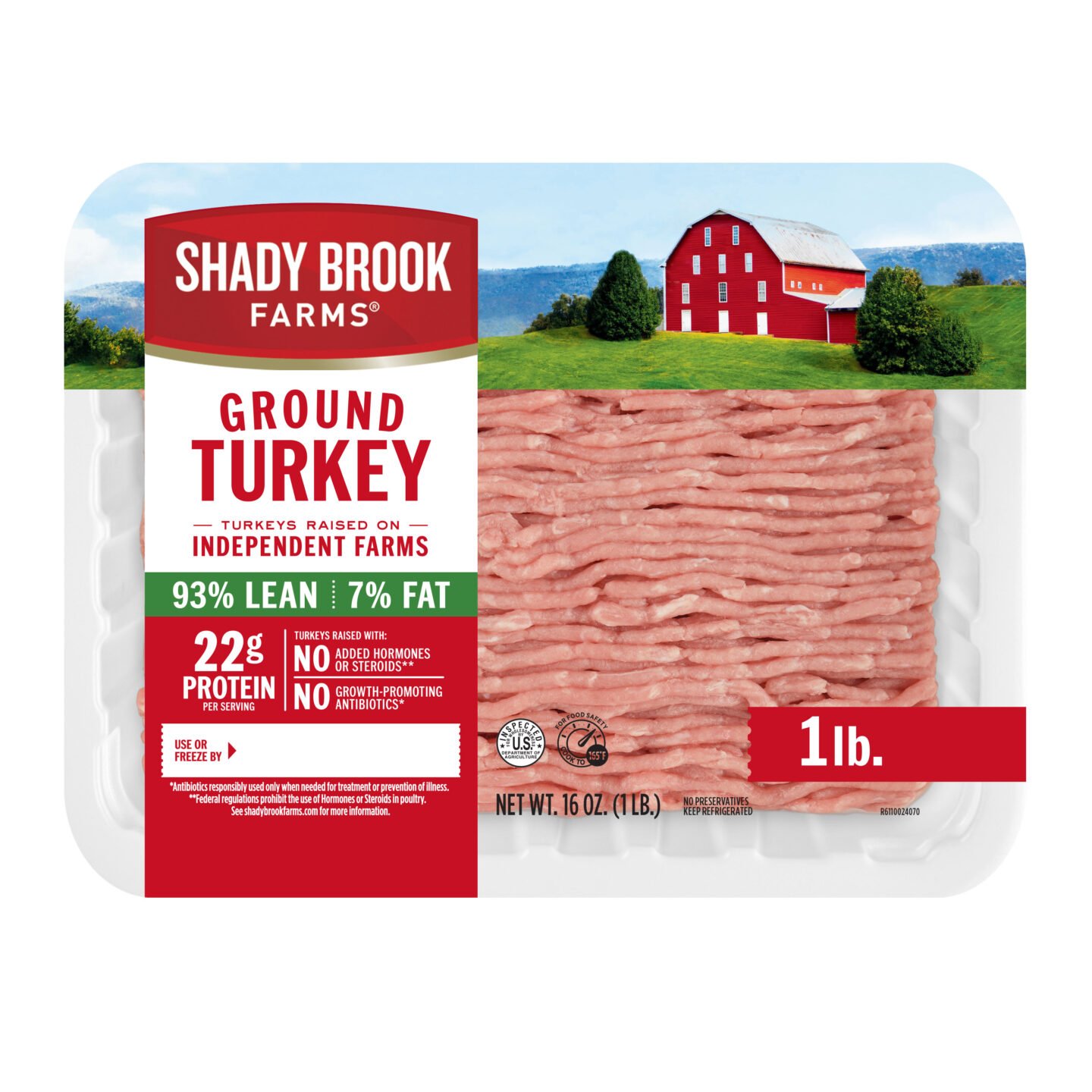
Calories in cooked ground turkey 93/7 deserve their own deep dive because the 93/7 blend is by far the most popular lean ground turkey option sold in the United States. Brands like Jennie-O, Butterball, and Shady Brook Farms all market their 93/7 products aggressively, and for good reason: it is the right ratio for most people’s goals.
Why 93/7 Is the Nutritional Sweet Spot
The 93/7 ratio works in practice for three solid reasons.
First, the calorie density is meaningfully lower than 85/15 without going so lean that cooking becomes frustrating. You can actually brown 93/7 in a skillet without it sticking all over the pan, and it stays moist enough in sauces and casseroles to be palatable the next day.
Second, the protein-to-calorie ratio is outstanding. At approximately 176 calories and 29 grams of protein per 100 grams cooked, you get roughly 16.5 grams of protein per 100 calories.
Third, the fat profile matters. The American Heart Association’s 2024 dietary guidelines recommend prioritizing monounsaturated fats, and ground turkey at 93/7 delivers those alongside its saturated fat content.
Full Calorie Breakdown for 93/7 by Common Serving Sizes
| Serving Size | Calories | Protein (g) | Fat (g) | Saturated Fat (g) |
|---|---|---|---|---|
| 2 oz cooked | 99 cal | 16g | 4g | 1.1g |
| 3 oz cooked | 149 cal | 24g | 6g | 1.7g |
| 4 oz cooked | 199 cal | 32g | 8g | 2.2g |
| 5 oz cooked | 248 cal | 40g | 10g | 2.8g |
| 6 oz cooked | 298 cal | 48g | 12g | 3.3g |
| 1 cup cooked (135g) | 238 cal | 39g | 10g | 2.7g |
Does Draining 93/7 Ground Turkey Lower the Calories?
Yes, draining cooked 93/7 ground turkey in a colander and patting it with a paper towel does reduce the calorie count, though the reduction is modest compared to draining the fattier 85/15 blend. Specifically, research on similar lean ground meats suggests that draining and rinsing can remove 5 to 15 percent of remaining surface fat. For 93/7, that translates to a reduction of roughly 5 to 15 calories per 100-gram serving.
Ground Turkey Nutrition Beyond Calories
Ground turkey nutrition is about a lot more than the calorie number. In addition, this protein source delivers an impressive collection of micronutrients that support everything from muscle repair to immune health, and the full nutritional picture makes a convincing case for keeping it in your regular rotation.
Protein Content: The Primary Draw
Cooked ground turkey is a complete protein, meaning it contains all nine essential amino acids your body cannot produce on its own. A 4-ounce serving of cooked 93/7 ground turkey provides approximately 32 grams of protein. For context, the National Academy of Medicine recommends 0.8 grams of protein per kilogram of body weight for sedentary adults, rising to 1.2 to 2.0 grams for active individuals. A single 4-ounce serving gets a 150-pound sedentary person roughly halfway to their daily target in one meal.
Key Vitamins and Minerals
| Nutrient | Amount per 3oz Cooked | % Daily Value | Primary Benefit |
|---|---|---|---|
| Selenium | 23 mcg | 42% | Thyroid function, antioxidant |
| Niacin (B3) | 6.3 mg | 50%+ | Energy metabolism, nervous system |
| Zinc | 3.5 mg | 32% | Immune function, wound healing |
| Vitamin B12 | 1.0 mcg | 42% | Red blood cell formation |
| Phosphorus | 190 mg | 15% | Bone health, energy metabolism |
| Iron | 1.2 mg | 7% | Oxygen transport, energy |
Ground Turkey Nutrition and Weight Management
From a weight management perspective, the combination of high protein and moderate calorie density makes ground turkey particularly effective. In fact, research published in the American Journal of Clinical Nutrition in 2024 confirmed that high-protein diets increase satiety hormones and reduce hunger-related hormones more effectively than high-carbohydrate diets at the same calorie level. Ground turkey fits naturally and affordably into that type of eating pattern.
How the Cooking Method Changes the Calorie Count
This is the section most nutrition articles skip entirely, and it is genuinely useful information. Specifically, the cooking method you use has a real and measurable impact on how many calories end up in your finished dish.

Pan-Browning with Oil
Sauteing ground turkey in a skillet is the most common method in American home kitchens. If you add a tablespoon of olive oil before the turkey goes in, you are adding about 120 extra calories to your pan. As a result, split across four servings, that is roughly 30 calories per serving from oil alone. If you want to keep things leaner, a quick spray of nonstick cooking spray adds only about 7 to 10 calories total across the whole pan.
Draining After Cooking
Draining cooked ground turkey through a colander removes fat that rendered out during cooking. With 85/15 ground turkey, draining can meaningfully reduce the final calorie count by 15 to 25 calories per serving compared to not draining. Similarly, with 93/7, the reduction is smaller but still present.
Baking or Roasting
Baking ground turkey in patties or a loaf in the oven allows fat to drip away into the pan naturally, which keeps the final calorie count close to the USDA baseline or slightly below it. Beyond that, this method also tends to produce more even cooking throughout and works beautifully for meal prep batches.
Cooked Ground Turkey vs Other Proteins
To really understand where cooked ground turkey sits in your protein options, it helps to compare it directly to the other proteins most Americans eat regularly. For reference, all figures below are per 100 grams cooked, using USDA FoodData Central 2025 data.
Ground Turkey vs Ground Beef
Ground beef at 80/20 contains approximately 254 calories per 100 grams cooked, compared to 218 for ground turkey at 85/15. Moreover, the leaner 93/7 ground turkey at 176 calories per 100 grams compares favorably to even the leanest commonly available ground beef. Ground beef at 90/10 comes in at about 215 calories per 100 grams cooked, which is still higher than 93/7 turkey, and 93/7 also carries about 2 grams of saturated fat per 100 grams, while 90/10 ground beef has approximately 5 grams.

Ground Turkey vs Chicken Breast
Boneless, skinless chicken breast is often cited as the gold standard lean protein. Cooked chicken breast provides approximately 165 calories per 100 grams, which is lower than the 85/15 turkey blend but only slightly lower than 93/7 ground turkey at 176 calories. That said, the meaningful difference is versatility. Ground turkey works in tacos, meatballs, pasta sauces, stuffed peppers, and burgers in a way that a chicken breast does not.
Full Protein Comparison Table Per 100g Cooked
| Protein Source | Calories | Protein (g) | Fat (g) | Saturated Fat (g) |
|---|---|---|---|---|
| Ground turkey 99/1 | 155 | 30 | 3 | 0.9 |
| Chicken breast (no skin) | 165 | 31 | 4 | 1.0 |
| Ground turkey 93/7 | 176 | 29 | 7 | 2.0 |
| Ground turkey 85/15 | 218 | 27 | 12 | 3.2 |
| Ground beef 90/10 | 215 | 26 | 13 | 5.1 |
| Ground beef 80/20 | 254 | 24 | 18 | 7.0 |
| Canned tuna in water | 116 | 25 | 1 | 0.2 |
How to Track Calories in Cooked Ground Turkey Accurately
Accurate calorie tracking for cooked ground turkey does not need to be complicated, but it does require a few deliberate habits. Here is the process that works.
Step 1: Decide Your Reference Point
Choose whether you will weigh your turkey raw or cooked, and stick to it consistently. Use the matching nutrition data for whichever point you choose. Raw data for raw weight. Cooked data for cooked weight. Most registered dietitians recommend weighing after cooking because the calorie concentration is more accurate to what you actually eat.
Step 2: Use a Digital Food Scale
A digital food scale that measures in grams is the single most useful tool you can add to your kitchen for calorie tracking. Cup measurements introduce too much variability for anyone tracking ground turkey with any precision. Digital scales are available at most stores for well under twenty dollars and will immediately improve your accuracy.
Step 3: Log the Correct Fat Ratio
In tracking apps like MyFitnessPal, Cronometer, or Lose It, always search for the specific fat ratio rather than just turkey. Search for ground turkey 93/7 cooked or ground turkey 85/15 cooked rather than just ground turkey to get the right number.
Step 4: Account for Everything in the Pan
If you browned your turkey in a tablespoon of olive oil, log that oil separately. If you added a seasoning packet, sauce, or onions, log those too. Plain cooked ground turkey is the starting point, not the whole picture.
Step 5: Verify with USDA Data
The USDA FoodData Central database at fdc.nal.usda.gov is the most authoritative free resource for cooked ground turkey calorie data in the United States. When app entries conflict with each other, this is the source of truth.
FAQ: People Also Ask
How many calories are in cooked ground turkey per ounce?
Cooked ground turkey at 93/7 contains approximately 50 calories per ounce. The 85/15 variety comes in at about 62 calories per ounce, and the extra-lean 99/1 blend provides roughly 44 calories per ounce.
These figures are based on USDA FoodData Central 2025 data and apply to plain, unseasoned cooked ground turkey only.
How many calories in cooked ground turkey if I drain the fat?
Draining cooked ground turkey after browning removes a small amount of additional fat. For 93/7 ground turkey, draining may reduce calories by 5 to 15 per 100-gram serving. By comparison, the impact is larger with 85/15, where draining could save 15 to 25 calories per serving.
Is cooked ground turkey good for weight loss?
Yes, cooked ground turkey is one of the best proteins for weight loss. It is high in protein, which increases satiety, and relatively low in calories, especially at the 93/7 or 99/1 fat ratio.
For example, a 4-ounce serving of 93/7 cooked ground turkey provides about 32 grams of protein for only 199 calories, making it highly efficient for anyone in a calorie deficit.
How many calories in 1 cup of cooked ground turkey?
One cup of cooked ground turkey contains approximately 238 calories at the 93/7 fat ratio and approximately 296 calories at the 85/15 ratio. Keep in mind, these figures assume one cup equals approximately 135 grams of loosely packed cooked crumbled turkey.
What is the difference between raw and cooked ground turkey calories?
Raw ground turkey at 93/7 contains approximately 150 calories per 100 grams, while the same turkey cooked comes in at approximately 176 calories per 100 grams. The calorie count per gram increases when cooked because water evaporates during cooking, concentrating the remaining calories into a smaller mass.
How much protein is in cooked ground turkey compared to calories?
Cooked ground turkey at 93/7 provides about 29 grams of protein per 176 calories per 100 grams cooked, which is approximately 16.5 grams of protein per 100 calories.
As a result, this excellent protein-to-calorie ratio rivals chicken breast and surpasses most ground beef options, making it a highly efficient protein source for any diet goal.
Is 93/7 or 85/15 ground turkey better for muscle building?
Both support muscle building effectively because both provide complete protein with all essential amino acids. The 85/15 blend provides slightly more calories, which can help during a calorie-surplus muscle-building phase.
On the other hand, the 93/7 blend offers a better protein-to-calorie ratio and is generally preferred for body recomposition goals where building muscle while minimizing fat gain is the priority.
Does the cooking method significantly change the calories in ground turkey?
The cooking method itself causes minimal calorie change to the turkey, but what you add during cooking does matter. A tablespoon of olive oil adds about 120 calories to your pan, distributed across however many servings you make.
Furthermore, draining and blotting cooked turkey removes modest additional fat.

Conclusion
Understanding calories in cooked ground turkey is a lot more useful once you break it down by fat ratio, serving size, and cooking method rather than looking for one single number that applies to every situation.
Here are the three key takeaways from this guide:
- First, match your measurement to the right data. Weigh cooked turkey with cooked nutrition data and raw turkey with raw data. Mixing them creates a 10 to 20 percent calorie error.
- Second, the 93/7 blend is the all-around best choice for most people. It balances flavor, cookability, and lean ground turkey nutrition in a way that is actually sustainable day to day.
- Third, a digital food scale beats measuring cups every time. A packed versus loosely filled cup of cooked ground turkey can differ by nearly 100 calories.


Post Comment